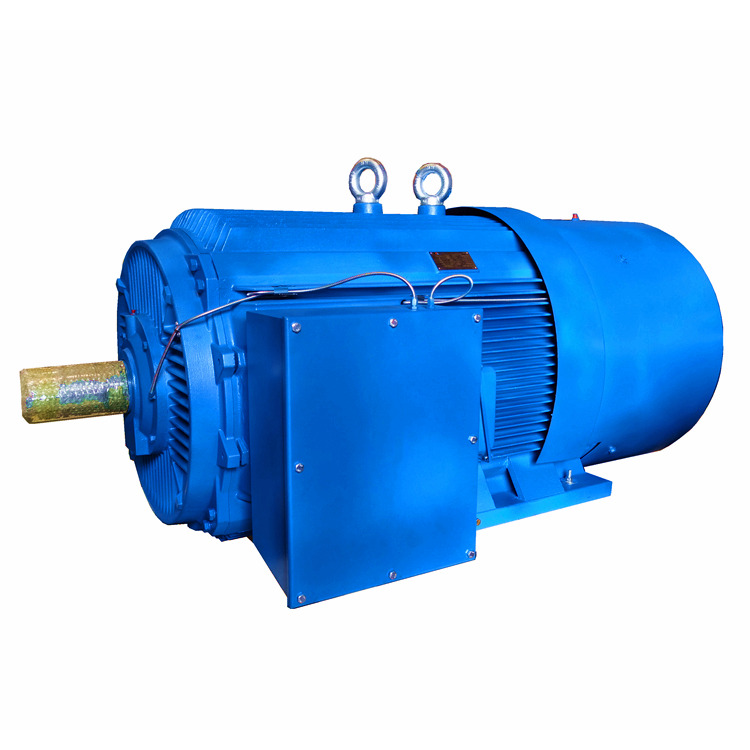
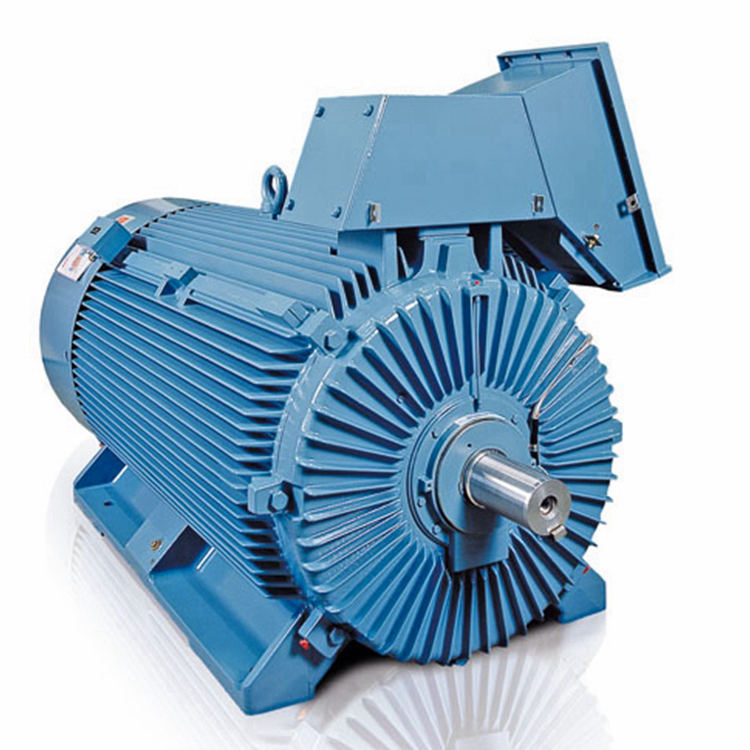
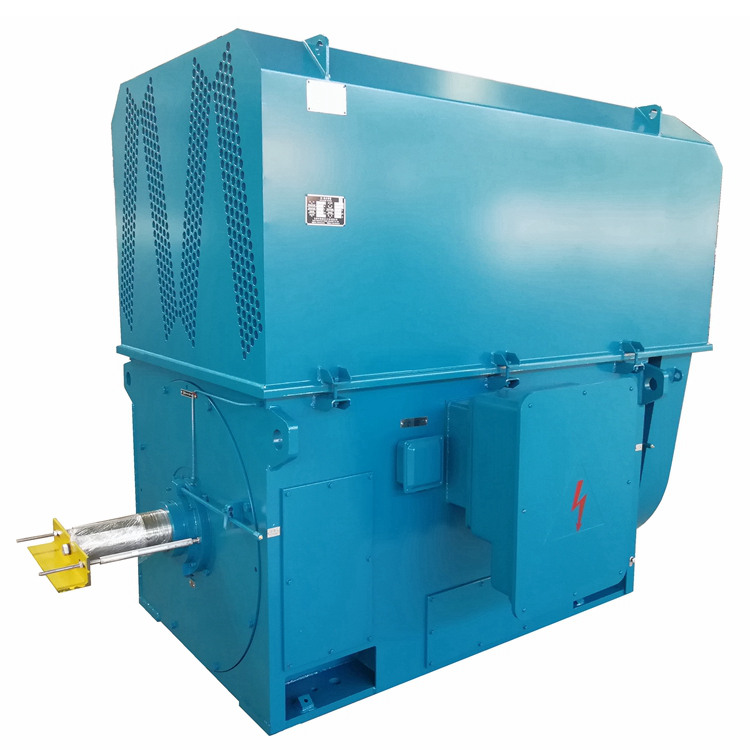
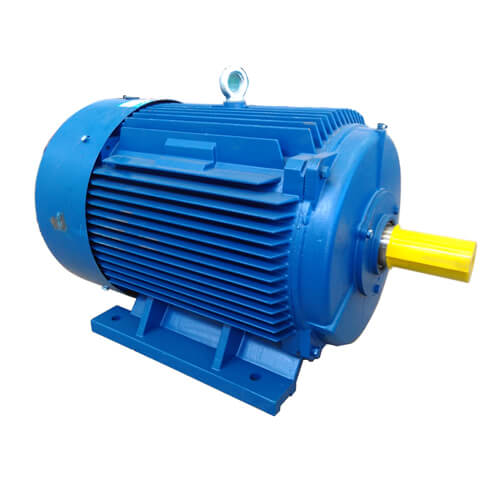
Low Voltage Squirrel Cage Motors can be started in several ways, but the correct choice depends on motor size, load torque, power supply capacity, starting frequency, speed control requirements, and installation cost. This guide explains how a squirrel cage motor starts with a Direct-On-Line starter, soft starter, or Variable Frequency Drive, and provides a practical selection and commissioning method for purchasing teams, electrical engineers, and maintenance personnel.
What Do Buyers Need to Decide Before Selecting a Motor Starter?
The main purchasing question is not simply whether a motor can start. The important question is whether it can start safely, repeatedly, and economically without damaging the motor, driven equipment, or electrical network.
Match the Starter to the Application
Before requesting a quotation, define the operating conditions of the motor and driven machine. A pump, fan, compressor, conveyor, crusher, and hoist may require completely different starting methods.
- Motor rated power and rated voltage.
- Motor full-load current and starting current.
- Required starting torque.
- Driven load torque and inertia.
- Number of starts per hour.
- Required acceleration and deceleration time.
- Whether constant speed or variable speed is required.
- Available short-circuit capacity of the electrical network.
- Available installation space and cooling conditions.
- Required control, communication, protection, and monitoring functions.
Control Starting Current and Voltage Drop
A squirrel cage induction motor usually draws a high current when connected directly to the supply. This current can cause voltage dips, nuisance tripping, contactor wear, and interference with other equipment.
A DOL starter applies full voltage immediately. A soft starter gradually increases the applied voltage. A VFD gradually increases frequency and voltage together. The appropriate solution depends on how much the supply system can tolerate and how much starting torque the machine requires.
Protect the Motor and Driven Equipment
Purchasing teams should evaluate more than the purchase price of the starter. A starting system must protect against overload, phase loss, short circuit, locked rotor conditions, excessive temperature, incorrect rotation, and abnormal acceleration.
It should also protect mechanical components from shock. Sudden torque from a DOL start may damage couplings, belts, gearboxes, pump shafts, and conveyor products. A soft starter or VFD may reduce these mechanical stresses.
Consider the Total Cost of Ownership
The lowest initial price is not always the lowest operating cost. The evaluation should include the starter, bypass equipment, input and output reactors, harmonic filters, enclosure, cabling, commissioning, maintenance, spare parts, energy consumption, and expected service life.
- DOL normally has the lowest purchase and installation cost.
- A soft starter usually costs more but can reduce mechanical shock and starting current.
- A VFD has the highest initial complexity but provides speed control and process optimization.
How Does a Squirrel Cage Induction Motor Start?
A squirrel cage motor has a stator winding connected to an AC power supply and a rotor made of conductive bars shorted by end rings. When the stator receives power, it creates a rotating magnetic field. This field induces current in the rotor bars and produces electromagnetic torque.
First Step: Establish the Rotating Magnetic Field
When three-phase voltage is applied to the stator windings, the windings create a magnetic field rotating at synchronous speed. Synchronous speed is determined by supply frequency and motor pole count.
The approximate formula is:
Ns = 120 x f / P
- Ns is synchronous speed in revolutions per minute.
- f is supply frequency in hertz.
- P is the number of motor poles.
Second Step: Induce Rotor Current
At standstill, the rotor is not rotating, so the rotating magnetic field cuts the rotor bars at maximum relative speed. This induces rotor current. The interaction between the stator field and rotor current produces starting torque.
Third Step: Accelerate the Rotor
The rotor accelerates in the direction of the rotating magnetic field. As rotor speed increases, the difference between synchronous speed and rotor speed becomes smaller. This difference is called slip.
The motor must produce more torque than the driven load requires during acceleration. If the load torque is too high or the voltage is too low, the motor may accelerate slowly, draw excessive current, overheat, or fail to start.
Fourth Step: Reach the Operating Speed
When the motor reaches its normal operating speed, the motor current falls close to its rated full-load value. The motor continues to operate below synchronous speed because some slip is required to produce torque.
What Is a DOL Starter and When Should It Be Used?
A Direct-On-Line starter connects the motor directly to the full supply voltage. It is the simplest method for starting a squirrel cage motor and is commonly used when the motor and electrical network can tolerate the starting current.
How a DOL Starter Works
A typical DOL starter contains a circuit breaker or fuse, a contactor, an overload relay, control push buttons, and protective auxiliary contacts.
- The circuit breaker or fuse provides short-circuit protection.
- The contactor switches the motor supply on and off.
- The overload relay protects the motor from sustained overcurrent.
- The start button energizes the contactor coil.
- The auxiliary contact holds the contactor energized after the start button is released.
- The stop button opens the control circuit and disconnects the motor.
Advantages of DOL Starting
- Simple electrical design.
- Low initial cost.
- Low maintenance requirements.
- High starting torque at rated voltage.
- Easy troubleshooting.
- Small physical footprint.
Limitations of DOL Starting
- High inrush current, often several times the motor rated current.
- Possible voltage dips in weak electrical networks.
- High mechanical shock at start-up.
- No controlled acceleration or deceleration.
- No speed regulation.
- Possible nuisance tripping if the protection system is incorrectly selected.
Typical DOL Applications
DOL is often suitable for small motors, machines with low starting inertia, strong power networks, and applications that require full-speed operation without controlled ramping.
- Small centrifugal pumps.
- Small fans.
- Workshop machinery.
- Simple conveyors.
- Small compressors, where the compressor manufacturer permits direct starting.
What Is a Soft Starter and When Should It Be Used?
A soft starter uses power electronic devices, normally thyristors, to control the voltage applied to the motor during acceleration and stopping. It gradually increases the motor voltage instead of applying full voltage instantly.
How a Soft Starter Starts the Motor
- The control system confirms that the start command is valid.
- The soft starter begins firing its thyristors at a controlled point in each AC cycle.
- The motor receives reduced voltage and produces controlled starting torque.
- The firing angle is gradually changed to increase the motor voltage.
- The motor accelerates according to the programmed ramp time.
- When the motor reaches full speed, an internal or external bypass contactor may close.
- The bypass contactor reduces power losses and heat in the soft starter during normal operation.
Advantages of Soft Starters
- Lower starting current than DOL starting.
- Reduced voltage dips.
- Smoother mechanical acceleration.
- Reduced belt, coupling, gearbox, and shaft stress.
- Controlled stopping for selected applications.
- Simple operation when the motor normally runs at one fixed speed.
- Lower harmonic impact than many six-pulse VFD installations during normal operation, although input harmonics still exist.
Limitations of Soft Starters
- They do not provide continuous speed control during normal operation.
- Starting torque is reduced when voltage is reduced.
- Some high-inertia or high-breakaway-torque loads may not accelerate correctly.
- Heat dissipation and enclosure ventilation must be considered.
- Motor protection settings must be configured correctly.
- Soft stopping may not prevent all water hammer or mechanical shock problems.
Typical Soft Starter Applications
- Centrifugal pumps that need reduced hydraulic shock.
- Fans with gradual acceleration requirements.
- Compressors with suitable unloading arrangements.
- Conveyors that need reduced belt tension.
- Machines that run continuously at one speed.
What Is a VFD and When Should It Be Used?
A Variable Frequency Drive controls motor speed by changing the frequency and voltage supplied to the motor. It first converts AC input power to DC power and then uses an inverter section to create a controlled AC output.
How a VFD Starts the Motor
- The VFD receives a run command from a keypad, terminal, PLC, or communication network.
- The drive checks its programmed limits and protection conditions.
- The inverter produces a low-frequency output voltage.
- The motor begins turning at low speed with controlled current.
- The VFD increases output frequency according to the programmed acceleration ramp.
- The output voltage increases in coordination with frequency to maintain the required magnetic flux.
- The motor reaches the commanded operating frequency and speed.
- The VFD continuously adjusts output voltage and frequency to respond to load changes.
Advantages of VFD Starting
- Very low and controlled starting current.
- Adjustable acceleration and deceleration.
- Continuous speed control.
- High starting torque when the drive and motor are correctly sized.
- Energy savings for variable-torque fan and pump loads.
- Process control through analog signals, digital signals, PLCs, and industrial networks.
- Motor monitoring and fault diagnosis.
Limitations of VFD Starting
- Higher purchase and installation cost.
- More complex commissioning and troubleshooting.
- Possible electromagnetic interference.
- Output voltage harmonics and motor insulation stress.
- Potential bearing currents on larger motors.
- Requirement for correct grounding, cable selection, and EMC installation.
- Possible need for line reactors, load reactors, dV/dt filters, or sine-wave filters.
Typical VFD Applications
- Variable-speed pumps.
- Fans with changing airflow requirements.
- Extruders and process lines.
- Conveyors that need controlled speed.
- Mixers and agitators.
- Compressors with variable production requirements.
- Hoists and lifting equipment designed for VFD operation.
How Should Buyers Choose Between DOL, Soft Starter, and VFD?
The selection should begin with the required machine behavior rather than the starter brand. The following comparison provides a practical starting point.
| Requirement |
DOL |
Soft Starter |
VFD |
| Lowest initial cost |
Excellent |
Good |
Limited |
| Lowest starting current |
Limited |
Good |
Excellent |
| High starting torque |
Excellent at full voltage |
Application dependent |
Excellent when correctly configured |
| Controlled acceleration |
Limited |
Good |
Excellent |
| Controlled stopping |
Limited |
Good |
Excellent |
| Variable speed |
No |
No |
Yes |
| Installation complexity |
Low |
Medium |
High |
| Energy savings at reduced speed |
No |
No |
Often available |
Choose DOL When Simplicity Is the Main Requirement
Select DOL when the motor is relatively small, the supply network is strong, the driven machine can accept full starting torque, and the motor always runs at a fixed speed.
Choose a Soft Starter When Smooth Fixed-Speed Operation Is Required
Select a soft starter when the motor normally runs at full speed but direct starting causes mechanical shock, voltage drop, water hammer, belt stress, or excessive inrush current.
Choose a VFD When Speed or Process Control Is Required
Select a VFD when the machine must operate at different speeds, maintain pressure or flow, control production rate, reduce energy consumption, or provide precise acceleration and deceleration.
Check the Load Torque Before Reducing Voltage
A soft starter reduces motor voltage during acceleration. Motor torque is approximately proportional to the square of the applied voltage. If the voltage is reduced too far, the motor may not produce enough torque to overcome the load.
For high-inertia loads, high breakaway torque, or machines that require torque at low speed, a correctly sized VFD may be more suitable than a soft starter.
What Tools and Documents Are Required?
Safe and accurate installation requires both electrical tools and application information. The exact tools depend on local regulations and site conditions.
Required Technical Documents
- Motor nameplate data.
- Motor manufacturer data sheet.
- Starter or VFD installation manual.
- Motor wiring diagram.
- Single-line electrical diagram.
- Driven equipment manual.
- Protection and coordination study, where applicable.
- Applicable electrical codes and customer specifications.
- Control system I/O list.
- Grounding and cable schedule.
Required Installation and Test Tools
- Insulated screwdrivers and hand tools.
- Torque wrench suitable for electrical terminals.
- Digital multimeter rated for the installation category.
- Clamp meter for current measurement.
- Insulation resistance tester, when permitted by the equipment manufacturer.
- Phase rotation meter.
- Continuity tester.
- Appropriate crimping and cable preparation tools.
- Personal protective equipment required by the site safety procedure.
- Computer and manufacturer software for VFD or soft starter programming, when required.
What Are the Detailed Steps for Starting a Squirrel Cage Motor?
The following procedure applies as a general engineering guide. A qualified electrical professional must adapt it to the motor, starter, site regulations, and manufacturer instructions.
First Step: Record the Motor Nameplate Data
- Record rated voltage and connection type.
- Record rated current.
- Record rated frequency.
- Record rated speed and pole count.
- Record rated power.
- Record power factor and efficiency.
- Record insulation class and temperature rise.
- Record service factor, duty rating, and enclosure type.
- Confirm whether the motor is suitable for inverter operation if a VFD is being considered.
Do not select a starter from motor kilowatts alone. Rated current, voltage, starting torque, duty cycle, and environmental conditions are also essential.
Second Step: Identify the Driven Load
Determine how the driven equipment behaves during starting. Ask whether it starts unloaded, partially loaded, or fully loaded. Check whether the load torque increases with speed or remains high at low speed.
- Fans and centrifugal pumps generally have lower starting torque requirements.
- Conveyors may have high inertia and may start under load.
- Compressors may require unloading valves or special starting procedures.
- Positive displacement pumps can require high torque from standstill.
- Crushers and mixers may require high breakaway torque.
- Hoists require special attention to torque, braking, and safety functions.
Third Step: Calculate or Obtain the Starting Requirements
Obtain the motor starting current, motor starting torque, load torque, and load inertia from the motor and machine manufacturers. If the data is not available, request a formal application review from the equipment supplier.
Confirm that the motor torque curve remains above the load torque curve throughout acceleration. A motor that has sufficient locked-rotor torque may still fail to accelerate if the load torque becomes higher at an intermediate speed.
Fourth Step: Check the Power Supply
- Confirm the supply voltage and frequency.
- Confirm the number of phases.
- Check transformer capacity.
- Check feeder cable size and length.
- Check available short-circuit current.
- Evaluate voltage drop during starting.
- Confirm whether other sensitive loads share the same transformer.
- Check whether harmonic limits apply.
Use DOL only when the network can tolerate the starting current and voltage disturbance. A soft starter or VFD may be required when the supply is weak or when several motors start at the same time.
Fifth Step: Select the Starting Method
- Select DOL for a simple fixed-speed application with acceptable inrush current.
- Select a soft starter for fixed-speed operation with reduced mechanical and electrical stress.
- Select a VFD for variable speed, controlled torque, process regulation, or energy optimization.
- Confirm the selected starter current rating for the actual motor duty.
- Confirm overload capacity, bypass requirements, enclosure rating, and cooling requirements.
Sixth Step: Select Protection and Switching Equipment
Coordinate the protective devices with the motor and starter. The exact arrangement depends on local regulations and the starter manufacturer.
- Short-circuit protection.
- Motor overload protection.
- Phase loss and phase sequence protection.
- Ground fault protection where required.
- Emergency stop circuit.
- Disconnecting means and lockout provisions.
- Thermal protection connected to the motor, where available.
- Surge protection when required by the installation.
Do not use the overload relay as a substitute for short-circuit protection. These devices perform different protection functions.
Seventh Step: Inspect and Prepare the Motor
- Inspect the motor for shipping damage, moisture, contamination, and loose parts.
- Verify that the motor shaft rotates freely when disconnected from the load.
- Check bearings, coupling, belt tension, and mechanical alignment.
- Confirm that guards are installed before operation.
- Verify that cooling passages are clear.
- Check that the motor terminal box is dry and clean.
- Confirm the winding connection against the motor nameplate.
Eighth Step: Install and Wire the Starter
Install the starter according to the approved wiring diagram. Keep power wiring and control wiring properly separated where required. Use the correct cable size, gland, terminal, grounding conductor, and tightening torque.
- Connect the incoming supply to the correct input terminals.
- Connect the motor leads to the correct output terminals.
- Connect the protective earth conductor.
- Connect overload, thermistor, brake, and auxiliary contacts as required.
- Connect start, stop, emergency stop, and permissive circuits.
- Check shield termination and grounding for VFD cables.
- Confirm that a VFD output is never connected to a power factor correction capacitor.
Ninth Step: Perform Pre-Energization Tests
- Apply the site lockout and tagout procedure.
- Verify that the supply is isolated.
- Inspect all terminals for correct connection and tightness.
- Check protective earth continuity.
- Check phase-to-phase and phase-to-earth conditions as permitted by the manufacturer.
- Confirm that the motor connection matches the supply voltage.
- Verify that the driven machine can rotate in the intended direction.
- Confirm that personnel and tools are clear of rotating parts.
When using an insulation resistance tester, disconnect electronic equipment and follow the motor and starter manufacturers' instructions. Applying test voltage to a connected VFD or soft starter can cause damage.
Tenth Step: Program the Soft Starter or VFD
For a soft starter, configure the following settings:
- Motor rated current.
- Initial voltage or torque setting.
- Acceleration ramp time.
- Soft stop ramp time, if required.
- Current limit.
- Overload class.
- Kick-start function only when necessary and permitted.
- Motor protection and thermal settings.
For a VFD, configure the following settings:
- Motor rated voltage.
- Motor rated current.
- Motor rated frequency.
- Motor rated speed.
- Motor power rating.
- Acceleration and deceleration times.
- Minimum and maximum frequency.
- Control mode, such as volts per hertz or sensorless vector.
- Current limit and overload rating.
- Stop mode and braking method.
- Input and output control signals.
- Motor thermal protection.
Eleventh Step: Perform a No-Load Direction Test
- Confirm that the machine is safe to run without load.
- Jog or briefly start the motor according to the starter instructions.
- Check the rotation direction.
- Stop immediately if the direction is incorrect.
- Isolate the supply before changing any phase connections.
- For a VFD, change the output direction through the drive settings where appropriate.
Never reverse two motor phases while the motor is running. Wait until the motor has stopped and follow the required isolation procedure.
Twelfth Step: Perform a Loaded Start
- Confirm that all guards and safety devices are in place.
- Start the motor with the normal process load.
- Measure starting current and acceleration time.
- Observe voltage during acceleration.
- Check for unusual vibration, noise, smell, or bearing temperature.
- Confirm that the motor reaches normal speed without stalling.
- Check process pressure, flow, speed, or production output.
- Verify that the starter does not report an overload, phase loss, ground fault, or communication fault.
Thirteenth Step: Record Commissioning Results
Record the final settings and measured values for future maintenance and troubleshooting.
- Starter model and serial number.
- Motor nameplate data.
- Protection settings.
- Acceleration and deceleration times.
- Measured running current in each phase.
- Measured voltage in each phase.
- Starting current, when measured.
- Acceleration time.
- Rotation direction.
- Fault history and corrective actions.
- Ambient temperature and enclosure conditions.
What Common Mistakes Should Be Avoided?
Choosing a Starter Only by Motor Power
Two motors with the same power rating may have different rated currents, starting torque, efficiency, duty cycles, and overload requirements. Always select the starter using motor current and application conditions, not only kilowatts or horsepower.
Using a Soft Starter for a Load That Needs High Starting Torque
A soft starter reduces voltage and may reduce available torque too much for conveyors, crushers, mixers, and loaded compressors. Confirm the complete torque and inertia requirements before selecting it.
Using a VFD Without Checking Motor Compatibility
Older motors may require additional evaluation for insulation stress, cooling at low speed, bearing currents, and audible noise. Confirm whether the motor is inverter duty rated or whether filters and independent cooling are required.
Ignoring Motor Cooling at Low Speed
A standard motor fan often rotates with the motor shaft. At low VFD speed, airflow may be insufficient even though the motor is producing significant torque. Consider an independently powered cooling fan for continuous low-speed operation.
Setting the Overload Current Incorrectly
An overload setting that is too low may cause nuisance trips. An overload setting that is too high may fail to protect the motor. Use the motor nameplate current and follow the starter manufacturer's instructions and applicable regulations.
Forgetting the Voltage Connection
A motor marked for two voltages must be connected correctly. An incorrect star or delta connection can cause low torque, excessive current, overheating, or failure to start.
Installing a VFD With Poor Grounding or Cable Routing
Incorrect grounding and long unshielded motor cables can create electromagnetic interference, communication problems, bearing currents, and insulation stress. Follow the VFD manufacturer's cable, shield, grounding, and filter requirements.
Connecting Power Factor Capacitors to a VFD Output
Power factor correction capacitors must not be connected between a VFD and motor unless the drive manufacturer specifically approves the arrangement. The switching waveform can damage the drive, capacitor, or motor system.
Starting a Pump Without Checking the Hydraulic System
Incorrect valve position, blocked piping, dry running, air in the system, or water hammer can cause failure even when the motor starter is correctly selected. The electrical and mechanical commissioning procedures must be completed together.
Skipping the Direction Test
Reverse rotation can damage pumps, fans, compressors, and conveyors. Always perform a controlled direction test before applying the full process load.
Changing Parameters Without Recording the Original Settings
Unrecorded changes make troubleshooting difficult. Save the original configuration, final configuration, and commissioning measurements in the equipment file.
How Can a Purchasing Team Compare Supplier Offers?
A reliable quotation should contain more than a motor price and starter price. Request a complete technical schedule so that different suppliers can be compared on the same basis.
Request Complete Motor Information
- Rated power and voltage.
- Rated current and frequency.
- Speed and pole count.
- Efficiency and power factor.
- Starting torque and locked-rotor current.
- Duty rating.
- Insulation class.
- Enclosure and cooling method.
- Ingress protection rating.
- Bearing arrangement.
- Terminal box position.
- Applicable standards and certificates.
Request Complete Starter Information
- Starter rated current and overload capacity.
- Control voltage.
- Short-circuit withstand rating.
- Acceleration and stopping functions.
- Bypass contactor arrangement.
- Communication protocols.
- Protection and alarm functions.
- Enclosure dimensions and heat loss.
- Ambient temperature limits.
- Recommended spare parts.
- Installation and commissioning support.
- Warranty and after-sales service.
Evaluate Supplier Support and Documentation
The supplier should provide wiring diagrams, installation instructions, parameter lists, test reports, maintenance recommendations, and spare parts information. Clear documentation reduces commissioning time and helps maintenance teams resolve faults quickly.
Why Should ZCL Be Considered for Low Voltage Motor Projects?
ZCL can be evaluated as a motor supplier when the project requires dependable Low Voltage Squirrel Cage Motors for pumps, fans, compressors, conveyors, and industrial production equipment. The final motor and starting method should be selected from the actual load, electrical network, operating duty, and control requirements.
Build the Specification Around the Complete System
A motor should not be specified separately from its starter and driven machine. ZCL and the project engineering team should review motor data, starter type, protection, environmental conditions, installation method, and commissioning requirements as one coordinated system.
Confirm the Right Starting Method Before Ordering
- Use DOL when the application is simple and the supply can accept high inrush current.
- Use a soft starter when the application needs smooth fixed-speed acceleration.
- Use a VFD when the application needs variable speed, controlled torque, or process optimization.
The correct choice improves reliability, reduces unplanned downtime, protects the electrical network, and prevents unnecessary equipment cost. With a complete technical specification and a documented start-up procedure, ZCL Low Voltage Squirrel Cage Motors can be matched with the appropriate DOL starter, soft starter, or VFD for safe and efficient operation.
For every project involving Low Voltage Squirrel Cage Motors, start with the motor nameplate, load torque, power supply, and required machine behavior before selecting the starter.