When an aging factory motor begins drawing more current, running hot, or pushing electricity costs upward, the question is rarely just “IE3 or IE4?” This practical guide to IE3 vs IE4 Low Voltage Squirrel Cage Motors explains IE4 motor energy savings and how to choose an industrial electric motor using the language of the plant floor. It compares the premium efficiency motor, induction motor, and motor efficiency class through IEC 60034-30-1, slip, and power factor, while showing where the additional purchase cost can—and cannot—be recovered.
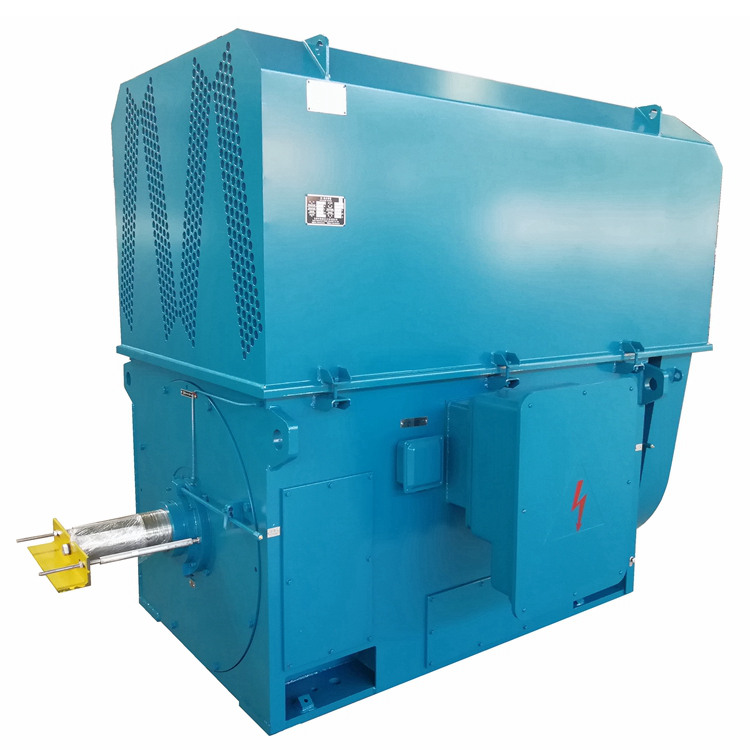
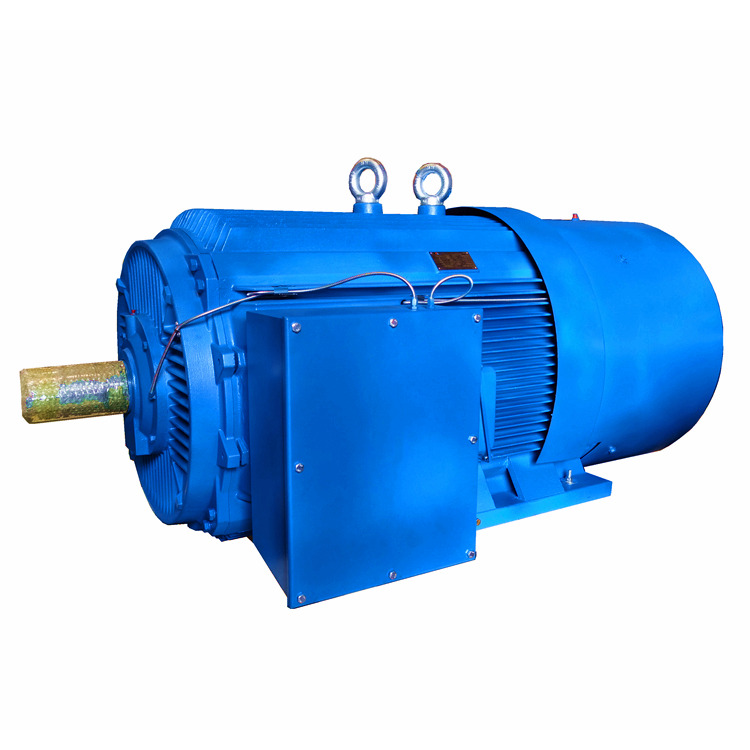
A low voltage squirrel cage motor has no brushes or slip rings in its rotor. Its rugged construction makes it common in pumps, fans, compressors, conveyors, machine tools, and process equipment. The difference between IE3 and IE4 is mainly the motor’s tested efficiency class, not a completely different operating principle.
Under IEC 60034-30-1, IE3 is generally described as “Premium Efficiency,” while IE4 is “Super Premium Efficiency.” The motor converts electrical input into mechanical output more effectively by reducing stator copper loss, rotor loss, iron loss, friction, and windage. The improvement may look small on a nameplate—often around 1 to 3 percentage points—but a motor operating 6,000 to 8,000 hours annually can turn that percentage into hundreds or thousands of kilowatt-hours.
The practical questions usually come from three situations:
The correct answer depends on annual operating hours, load profile, electricity tariff, motor size, starting method, ambient conditions, and whether the motor is connected directly across the line or controlled by a drive.
The table below uses representative values for 50 Hz, four-pole motors. Exact limits vary with rated output, pole count, frequency, voltage, and the applicable edition of the standard, so the manufacturer’s test certificate and nameplate should be treated as the final reference.
| Comparison point | IE3 low voltage squirrel cage motor | IE4 low voltage squirrel cage motor | What it means in practice |
|---|---|---|---|
| Efficiency class | Premium Efficiency | Super Premium Efficiency | IE4 normally produces lower losses at rated load. |
| Representative efficiency at 15 kW, 4-pole | Approximately 91.8% | Approximately 93.0% | Always confirm the exact rating on the nameplate. |
| Full-load loss at 15 kW output | About 1.34 kW | About 1.13 kW | IE4 can save about 0.21 kW at full load in this example. |
| Purchase price | Usually lower | Usually higher | The price premium must be assessed against operating hours. |
| Motor size and weight | Often close to the existing frame | May be similar, but some designs are longer or heavier | Check frame dimensions, shaft height, mounting holes, and inertia. |
| Starting current and torque | Depends on design and starting method | Depends on design; not automatically lower or higher | Review locked-rotor current, starting torque, and protection settings. |
| Variable frequency drive operation | Commonly available | Commonly available, but drive compatibility must be confirmed | Check insulation system, minimum speed, cooling, and bearing protection. |
| Best economic fit | Low-hour, low-load, or budget-sensitive applications | High-hour, high-load, or energy-cost-sensitive applications | Life-cycle cost is more important than purchase price alone. |
For example, consider a 15 kW motor operating at full load for 4,000 hours per year. A representative IE3 motor at 91.8% efficiency would draw approximately 16.34 kW, while a representative IE4 motor at 93.0% would draw approximately 16.13 kW. The difference is about 0.21 kW, or roughly 840 kWh per year. At an electricity price of $0.12 per kWh, the annual energy saving is approximately $101.
At 8,000 operating hours, the same theoretical saving becomes approximately 1,680 kWh, or $202 per year. A $500 IE4 price premium would therefore have a simple energy-only payback of about 2.5 years at 8,000 hours. If the motor operates only 1,500 hours annually, the payback extends beyond 13 years. This is why an IE4 motor is not automatically the most economical option for every machine.
Efficiency is not constant at every load point. A motor’s efficiency curve normally rises as load increases from light load, reaches its strongest operating region near the rated point, and falls when the motor is lightly loaded. The difference between IE3 and IE4 can therefore be smaller than expected on a motor that spends most of its life at 25% load.
A centrifugal pump controlled by a variable frequency drive may run at 40% to 70% of rated speed for much of the year. In this case, the drive may deliver greater system savings through affinity-law effects than the motor efficiency upgrade alone. For a centrifugal fan or pump, power can approximately follow the cube of speed. Reducing speed to 80% can theoretically reduce shaft power to about 51% of the original value, although real systems also include static pressure, control losses, and operating constraints.
That does not make IE4 irrelevant. Lower motor losses still reduce heat, but the energy manager should calculate the complete system: motor, drive, pump or fan, throttling valve, ductwork, control strategy, and operating schedule.
IE4 becomes more persuasive when the motor is heavily loaded and runs continuously. A 75 kW motor operating 7,500 hours per year can accumulate more than 500,000 kWh of mechanical output annually. Even a one-percentage-point efficiency difference can represent several thousand kilowatt-hours, depending on the actual load curve and rated efficiency.
Motor temperature also matters. Lower losses mean less heat generated inside the frame. However, it would be inaccurate to promise a fixed temperature reduction because winding temperature depends on ambient temperature, enclosure design, cooling fan performance, altitude, installation, harmonics, and load. Ask the supplier for temperature-rise data, insulation class, service factor, and thermal protection details instead of relying on the IE label alone.
| Application scenario | More suitable starting point | Reason | Important checks |
|---|---|---|---|
| Emergency replacement with limited budget | IE3, if legally and technically permitted | Lower purchase cost and generally broad availability | Frame, shaft, terminal box, mounting, voltage, frequency, and protection. |
| Continuous-duty pump or compressor | IE4 in many cases | High annual hours allow energy savings to recover the premium | Load profile, power factor, starting performance, and cooling. |
| Motor operating below 30% load | Load correction before class upgrade | Oversizing may cause more economic loss than the IE3-to-IE4 difference | Measure current, shaft load, pressure, flow, and operating schedule. |
| Variable frequency drive application | Either, based on system study | Drive control can dominate total energy performance | Insulation system, dv/dt, bearing currents, minimum speed, and forced cooling. |
| Harsh or dusty environment | The motor with better complete specification | IP rating, cooling, seals, and coating may matter more than IE class | IP55 or higher requirement, corrosion protection, ambient temperature, altitude. |
| New production line designed for decades of service | IE4, subject to payback | Long service life increases the value of reduced losses | Future energy prices, maintenance plan, spare-parts availability, and compliance. |
During one plant retrofit review, a maintenance engineer described replacing a frequently overloaded 30 kW motor on a conveyor. The original motor was selected from an old equipment schedule and regularly operated near its thermal limit. The team first measured running current over several shifts, checked the conveyor’s actual mechanical load, and verified the frame dimensions. They selected a correctly sized IE4 motor rather than simply installing a larger motor. After commissioning, the measured input power at the normal production load fell by approximately 2% to 3%, while the main operational improvement came from eliminating repeated thermal trips. The engineer’s conclusion was clear: the motor class helped, but correct sizing and alignment delivered the more noticeable reliability benefit.
In another reported compressor replacement, the buyer initially focused on the IE4 label and ignored the starter. The new motor had acceptable efficiency, but the existing protection settings were based on the old motor’s full-load current. After the overload relay was reset using the new nameplate data and the motor acceleration time was checked, nuisance trips stopped. This case illustrates why motor replacement is an electrical integration project, not a simple box-for-box purchase.
The purchase price is only one part of the total cost of ownership. A useful calculation includes:
The simple payback formula is:
Payback period = IE4 additional investment ÷ annual energy-cost saving
Suppose an IE3 motor costs $1,800 and an equivalent IE4 motor costs $2,300. If the IE4 motor saves $220 per year in measured electricity use, the energy-only payback is approximately 2.3 years. If the equipment operates 1,800 hours per year and saves only $65 annually, the payback is approximately 7.7 years. A buyer should then compare that result with the expected remaining life of the machine, financing cost, maintenance value, and local electricity-price forecasts.
Price quotations should be compared on equal technical terms. Confirm rated output, efficiency at 50% and 75% load, full-load current, power factor, locked-rotor current, locked-rotor torque, breakdown torque, service factor, insulation class, IP rating, bearing type, noise level, vibration grade, paint system, and test standard. An apparently cheaper IE4 quotation may omit a brake, encoder, forced ventilation, anti-condensation heater, or VFD-rated insulation that the application requires.
Feedback from maintenance teams tends to follow three themes. First, users appreciate IE4 motors when they operate continuously because the energy meter provides a visible financial result. Second, users value IE3 motors for standardization because many plants already stock IE3 spares, couplings, and protection settings. Third, both groups report problems when the motor is selected only by power rating and not by mechanical dimensions or starting behavior.
A practical maintenance comment from a water-treatment facility was that the replacement motor’s efficiency was less important than whether it could be installed during a four-hour shutdown. The team chose a motor with matching frame and shaft dimensions, confirmed the pump’s operating point, and prepared the cable glands and overload settings in advance. The project avoided an additional day of downtime. For that facility, installation compatibility had a higher immediate value than a marginal difference in annual energy savings.
Another user running a fan system reported that an IE4 motor reduced motor-side losses, but the largest electricity reduction came after the variable frequency drive schedule was corrected. The fan had been running at full speed during low-demand periods. Once the control setpoint was adjusted, total measured consumption fell far more than the IE3-to-IE4 motor change alone would have achieved. This is a useful warning against attributing every energy improvement to the motor efficiency class.
IE4 is usually the strongest candidate for pumps, compressors, fans, conveyors, and process machines operating more than 4,000 hours per year at medium-to-high load. It is especially attractive where electricity prices are high, the motor will remain in service for five to fifteen years, and the additional purchase cost can be recovered within the company’s target payback period.
IE3 can be the rational choice for standby equipment, seasonal machinery, intermittent conveyors, or applications with fewer than approximately 2,000 operating hours per year. It may also be appropriate where the IE4 premium is large, the motor is lightly loaded, or the equipment is scheduled for replacement in the near future.
A 45 kW motor operating at 20% load may waste more money through oversizing and poor control than a correctly sized 30 kW IE3 motor would. Before selecting IE4, record voltage, current, power, power factor, speed, pressure, flow, and operating hours. A portable power analyzer used across representative production shifts can reveal whether the motor is normally at 40%, 70%, or 100% load.
For variable-speed applications, ask whether the motor has inverter-duty insulation, suitable bearing protection, an approved speed range, and adequate cooling at low frequency. A self-cooled motor may lose cooling capacity as speed falls. Forced ventilation, thermal sensors, insulated bearings, or a shaft-grounding ring may be required depending on motor size and drive configuration.
ZCL can be considered alongside other established motor suppliers when the buyer needs a configurable low voltage squirrel cage motor with clear technical data. Its value should be judged by the actual quotation: efficiency test results, dimensional drawings, delivery schedule, warranty terms, spare-parts support, insulation system, IP protection, and compatibility with the plant’s electrical equipment. The right decision is not “choose ZCL because it is IE4”; it is “choose the supplier that can prove the motor fits, performs, and can be supported over its service life.”
IE4 is generally suitable for high-utilization industrial equipment, large motors with substantial annual energy consumption, new installations, and facilities pursuing a short life-cycle payback. IE3 is often suitable for low-hour machinery, standby equipment, budget-limited replacements, and correctly sized motors whose IE4 premium cannot be recovered within the planned service period.
Neither class is automatically superior in every application. The best choice combines measured load, operating hours, electricity price, mechanical fit, drive compatibility, starting performance, cooling, protection, and supplier support. Before ordering from ZCL or any other manufacturer, request comparable test data and confirm every interface detail with the installation team.
For the next decision step, collect the existing motor nameplate, twelve months of operating hours if available, recent power measurements, and the supplier’s IE3 and IE4 quotations. Then calculate the payback using your actual tariff. This approach makes the choice between IE3 vs IE4 low voltage squirrel cage motors, IE4 motor energy savings, and how to choose an industrial electric motor based on evidence rather than adjectives, while keeping the premium efficiency motor, induction motor, and motor efficiency class aligned with IEC 60034-30-1, measured slip, and real power factor.
Copyright © ZCL Shijiazhuang Electric Motor Technology Co.,Ltd. All Rights Reserved | Sitemap | Powered by