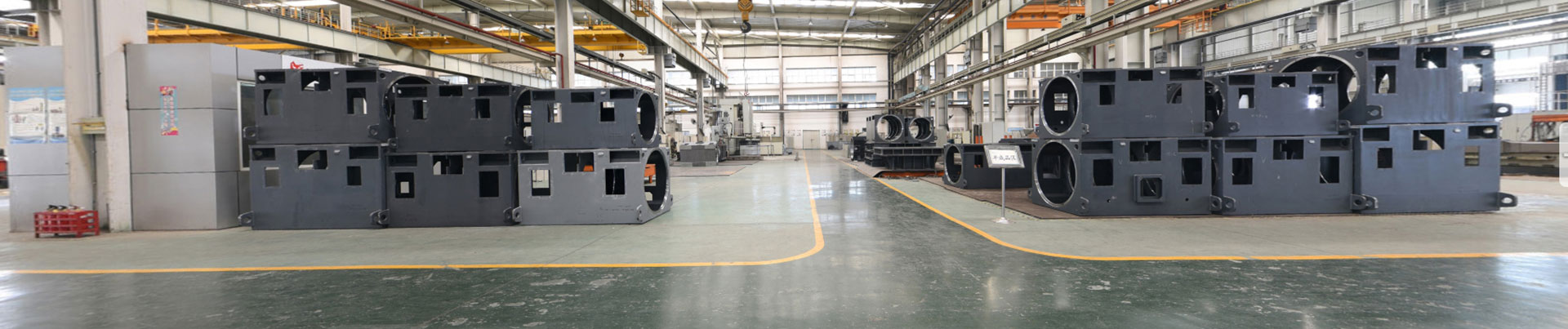
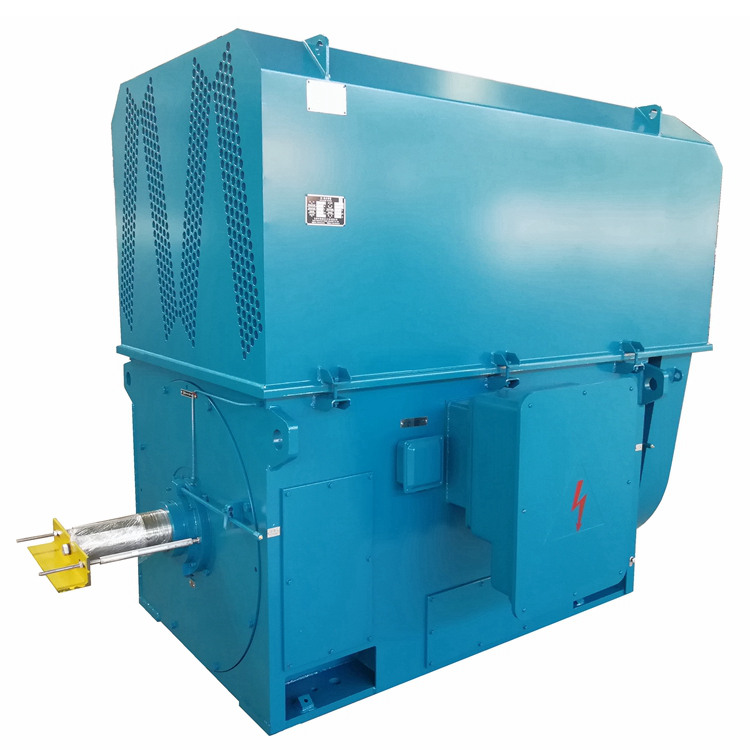
Selecting the right Low Voltage Squirrel Cage Motors can reduce unplanned downtime, starting failures, excessive energy consumption, and premature bearing damage. In this guide, we at ZCL provide a simple, actionable process: define the industrial load, calculate the required motor rating, verify electrical and mechanical compatibility, confirm standards and testing, and complete installation checks before commissioning.
!
A motor that is too small may overheat during continuous operation. A motor that is significantly oversized can create unnecessary purchase costs, lower operating efficiency, and poor power-factor performance.
The correct motor must match:
ZCL supports industrial users by treating motor selection as a complete engineering process rather than a simple horsepower or kilowatt comparison.
The first step in How to Select Low Voltage Squirrel Cage Motors for Industrial Loads is to identify how the driven equipment behaves.
Industrial loads generally fall into three categories:
| Load type | Typical equipment | Selection consideration |
|---|---|---|
| Constant torque | Conveyors, crushers, positive-displacement pumps | Requires stable torque throughout the speed range |
| Variable torque | Centrifugal fans and pumps | Torque changes approximately with the square of speed |
| Constant power | Winders, machine tools, rolling equipment | Power remains relatively stable while torque changes with speed |
For example, a centrifugal pump may have relatively low starting torque but require substantial power at operating speed. A loaded conveyor, by contrast, may need high breakaway torque before normal running begins.
Before requesting a ZCL quotation, we recommend recording:
If the existing motor repeatedly trips during startup, do not simply install a larger motor. First verify voltage drop, cable sizing, acceleration time, driven-machine friction, and starting-torque requirements.
Motor selection should be based on measured operating requirements wherever possible.
For rotational equipment, the relationship between torque and power can be expressed as:
[ T = \frac{9550 \times P}{n} ]
Where:
A practical selection process normally includes a reasonable service margin. However, excessive oversizing should be avoided.
We commonly evaluate a margin of approximately 10% to 15% for stable loads, although the final value depends on:
For a conveyor that requires 30 kW at the shaft, for example, the selected motor may need to exceed 30 kW after accounting for gearbox efficiency, peak loading, startup conditions, and thermal duty.
The motor’s rated torque must also exceed the continuous load torque, while its locked-rotor torque and pull-up torque must support acceleration without excessive voltage drop.
Low-voltage motors are commonly supplied for industrial systems such as 380 V, 400 V, 415 V, 460 V, or other regional standards. The motor nameplate must match the supply system.
Check the following electrical parameters carefully:
The starting method directly affects motor performance and plant power quality.
Direct-on-line starting is simple and economical, but it may produce an inrush current of approximately 5 to 8 times the rated current, depending on motor design.
Star-delta starting reduces starting current but also reduces starting torque. It is suitable only when the driven load can accelerate with the available torque.
A soft starter limits voltage ramp-up and reduces mechanical shock. It is useful for pumps, fans, and conveyors where controlled acceleration is important.
A VFD provides speed control, controlled acceleration, and process optimization. When selecting a ZCL motor for VFD duty, verify:
The installation environment determines the appropriate enclosure.
Typical protection ratings include:
The IP rating should be selected according to IEC 60034-5, not based solely on appearance or marketing terminology.
For dusty, humid, corrosive, or washdown environments, evaluate:
A standard motor must not be installed in a classified hazardous area unless its certification and construction meet the applicable explosion-protection requirements.
The duty rating describes how the motor operates over time. S1 continuous duty is common for pumps, fans, and conveyors that run continuously at a stable load. Cyclic applications may require S3, S4, or another duty type.
When reviewing ZCL Low Voltage Squirrel Cage Motors, check:
A motor with Class F insulation does not automatically mean it can operate at unlimited overload. The complete thermal design, temperature rise, and application duty must be assessed together.
Even a correctly rated motor may fail to install if the mechanical interface is wrong.
Before ordering, compare the motor specification with the driven equipment:
For alignment-critical machinery, we recommend using calibrated measurement tools and recording shaft and coupling dimensions to 0.01 mm where the equipment manufacturer requires precision alignment.
Poor alignment can generate radial loads, vibration, coupling wear, and bearing failures even when the motor itself is correctly manufactured.
Purchase price is only one part of motor economics. For motors operating several thousand hours per year, electricity consumption normally dominates lifecycle cost.
Compare:
For example, a motor running 6,000 hours per year at a high load should receive a more detailed energy evaluation than a standby motor used for only a few hours each month.
Efficiency testing should be reviewed against IEC 60034-2-1 or the applicable regional equivalent. Nameplate efficiency, test efficiency, and system efficiency should not be treated as identical values.
Reliable motor selection includes verification of manufacturing and testing requirements.
For ZCL Low Voltage Squirrel Cage Motors, buyers should request documentation covering the applicable standards and inspection scope, including:
Depending on the contract, inspection may include:
For quality-sensitive projects, purchasers may specify 100% final inspection, test reports for every motor, and a documented response time of 24 hours for technical clarification. These requirements should be written into the purchase specification rather than agreed informally.
Use this checklist before placing an order for Low Voltage Squirrel Cage Motors:
Possible causes include excessive starting current, low supply voltage, high load inertia, incorrect star-delta timing, or undersized cables.
To resolve the problem:
Overheating may result from overload, blocked cooling passages, high ambient temperature, unbalanced voltage, phase loss, or excessive VFD low-speed operation.
Recommended actions include:
Vibration is often related to misalignment, soft foot, unbalanced couplings, damaged bearings, foundation looseness, or resonance.
A reliable commissioning procedure should include:
This problem usually occurs when the purchaser checks only power and speed. The frame size, shaft extension, flange, and mounting dimensions must also match.
To avoid delays, provide ZCL with the existing motor nameplate, dimensional drawing, shaft sketch, and installation photographs before final confirmation.
We recommend using the following resources during the engineering process:
A structured motor data sheet reduces specification errors and makes technical comparison easier across suppliers.
Correct selection is only the beginning. Before energizing the motor, complete these checks:
During the first run, record:
Keep these measurements as a baseline. A later increase in current, temperature, vibration, or noise can then be identified quickly through condition-based maintenance.
The most effective approach to How to Select Low Voltage Squirrel Cage Motors for Industrial Loads is to combine electrical, mechanical, thermal, environmental, and maintenance requirements in one specification.
At ZCL, we recommend that buyers submit the following information before quotation:
By following these steps, businesses can reduce incorrect orders, avoid startup failures, improve energy performance, and extend equipment service life. Review the checklist today, collect your load data, and work with ZCL to select Low Voltage Squirrel Cage Motors that are correctly matched to the real operating conditions of your industrial plant.
Copyright © ZCL Shijiazhuang Electric Motor Technology Co.,Ltd. All Rights Reserved | Sitemap | Powered by