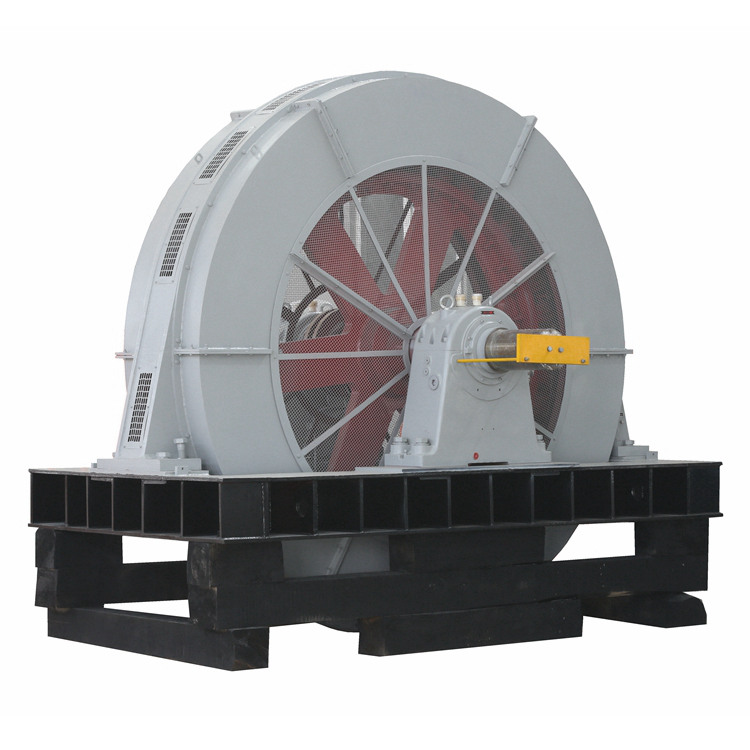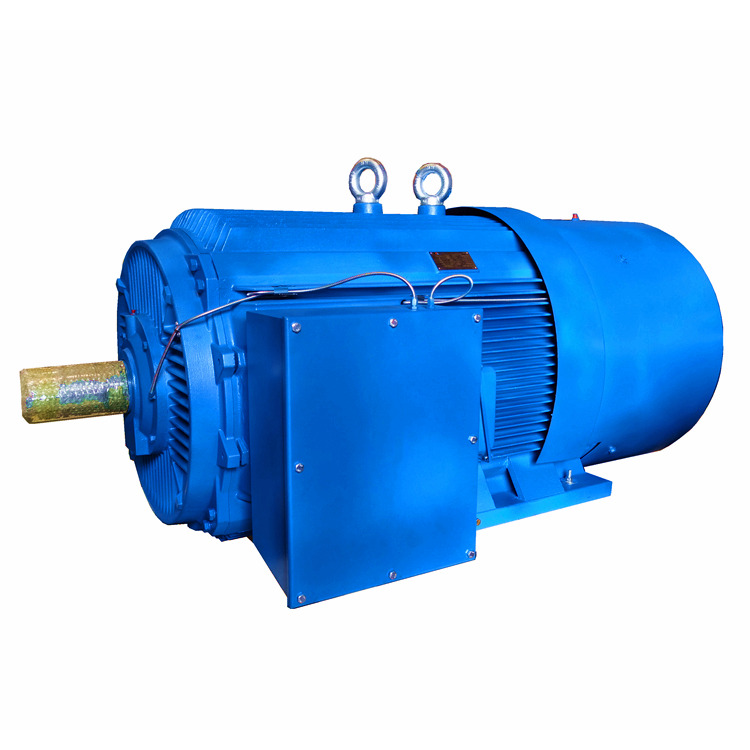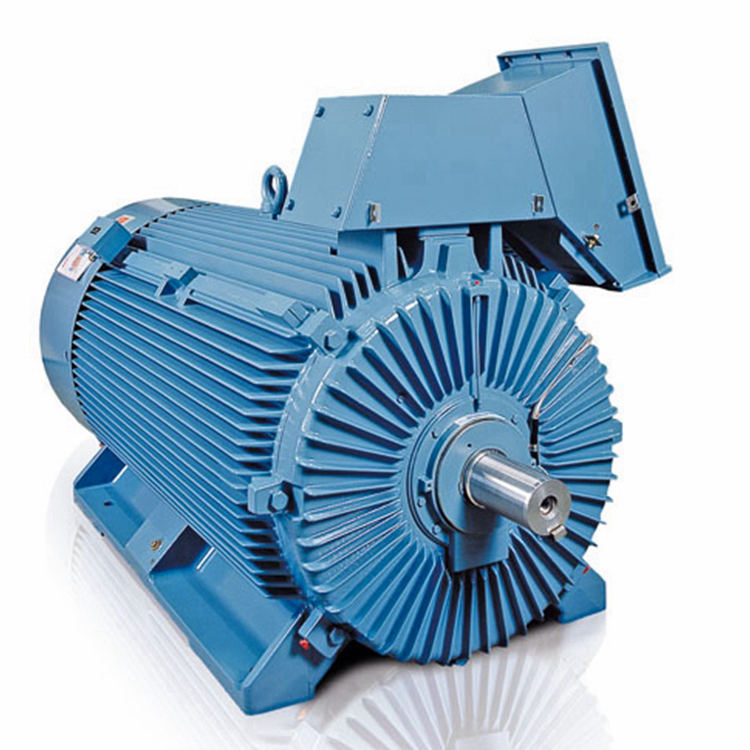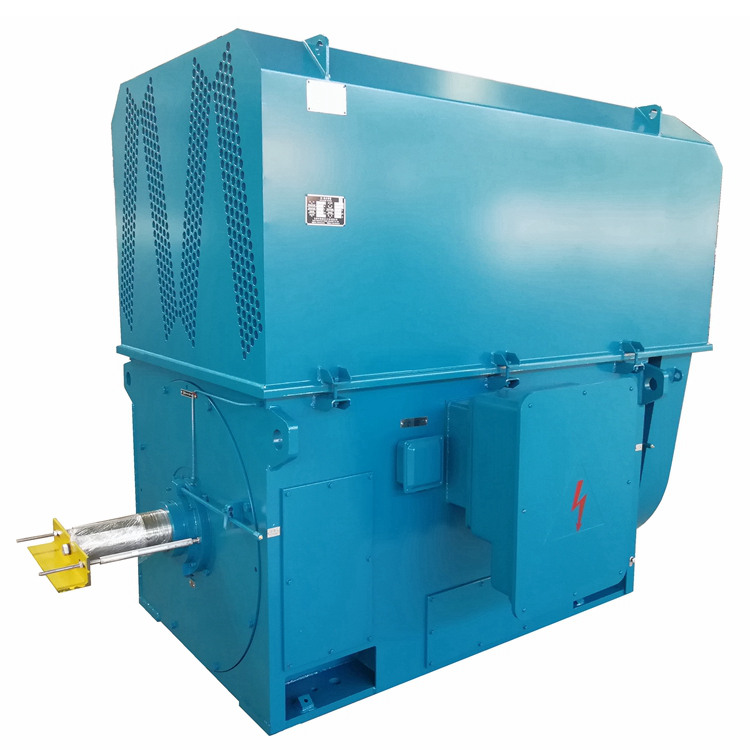
Choosing between a squirrel cage motor vs slip ring motor for industrial applications becomes critical when a conveyor will not start under load, a crane accelerates too abruptly, or maintenance costs exceed the original budget. This guide explains low voltage squirrel cage motor selection and when a slip ring motor for high inertia loads is justified. The comparison covers induction motor efficiency, rotor resistance starting, and motor maintenance, while applying practical engineering terms such as NEMA design class, locked-rotor torque, and power factor.
Why the Squirrel Cage Motor vs Slip Ring Motor Decision Matters
At first glance, both machines are three-phase asynchronous motors. Both use a rotating magnetic field, both can be manufactured for low- or medium-voltage systems, and both are available in common IEC frame sizes. The practical difference appears during starting and speed control.
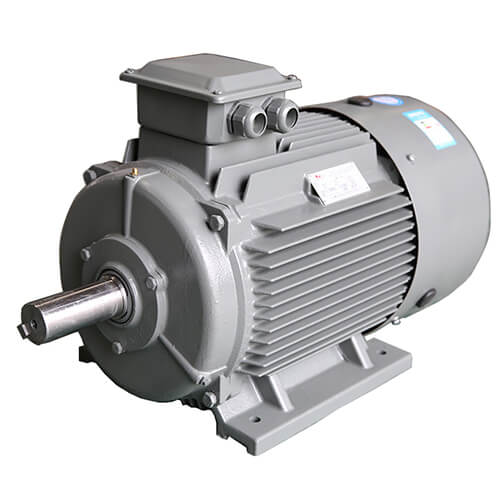
A squirrel cage motor uses conductive rotor bars short-circuited by end rings. Its rotor has no brushes or external electrical connections. This makes the motor mechanically simple, typically efficient, and suitable for pumps, fans, compressors, conveyors, machine tools, and general factory equipment.
A slip ring motor uses a wound rotor connected to slip rings and carbon brushes. External resistance can be inserted into the rotor circuit during starting. That arrangement can produce high starting torque with lower starting current, which is valuable when a motor must accelerate a loaded mill, crusher, hoist, elevator, or long belt conveyor.
The common user problem is not “Which motor is stronger?” A correctly rated squirrel cage motor can deliver hundreds or thousands of kilowatts. The real question is whether the driven machine needs simple full-voltage operation, controlled acceleration, high breakaway torque, or frequent speed adjustment. Selecting from the load profile avoids paying for a slip ring system where a modern inverter-fed motor would perform better.
Low Voltage Squirrel Cage Motors and Slip Ring Motors: How They Work
Low Voltage Squirrel Cage Motor Operating Principle
When three-phase stator windings receive power, they create a rotating magnetic field. The difference between synchronous speed and rotor speed is called slip. For a 50 Hz, four-pole motor, synchronous speed is 1,500 rpm. If the rotor runs at 1,470 rpm, the slip is 2%:
Slip = (1,500 − 1,470) / 1,500 × 100 = 2%
In normal operation, a squirrel cage motor commonly operates with a slip of approximately 1% to 5%, depending on motor size, load, and design. The absence of brushes reduces wear points and simplifies enclosure design. Modern IE3 and IE4 motors can also reduce operating losses, although the achievable efficiency depends on rated power and operating load.
Slip Ring Motor with External Rotor Resistance
The wound rotor in a slip ring motor allows resistance to be connected in series with each rotor phase. During starting, this resistance improves the torque-to-current relationship and can reduce the electrical and mechanical shock associated with direct-on-line starting.
As the motor accelerates, resistance is progressively removed. In traditional systems, this is done through stepped contactors or a liquid resistance starter. In newer installations, a slip ring motor may be paired with a soft starter or variable frequency drive, although this can reduce the economic advantage of the traditional rotor-resistance arrangement.
Rotor resistance also creates heat. If the motor starts too frequently, the external resistor, contactor system, and rotor circuit must be thermally rated for the duty cycle. A slip ring motor is therefore not automatically the lower-cost or more efficient solution.
Parameter Comparison: Squirrel Cage Motor vs Slip Ring Motor
| Parameter | Squirrel Cage Motor | Slip Ring Motor | Industrial Selection Meaning |
|---|---|---|---|
| Rotor construction | Cast or fabricated conductive bars with short-circuiting end rings | Three-phase wound rotor connected to slip rings | Squirrel cage construction has fewer mechanical wear components. |
| Typical starting method | Direct-on-line, star-delta, soft starter, or VFD | External rotor resistance, soft starter, or VFD | Slip ring systems are useful where controlled high-torque starting is required. |
| Starting current | Direct-on-line starting may reach approximately 5 to 8 times rated current | Often lower for the same starting torque when resistance is correctly selected | Check transformer capacity, voltage drop, and utility limits. |
| Starting torque | Typically about 1.5 to 2.5 times rated torque, depending on design | Can reach approximately 2.0 to 3.0 times rated torque with external resistance | Verify the actual breakaway torque of the driven machine. |
| Running efficiency | Commonly higher because there are no brush and slip-ring losses | Lower when rotor resistance remains in circuit or is poorly adjusted | For continuously running loads, lifecycle energy cost often favors the squirrel cage design. |
| Speed control | Excellent with a properly sized VFD | Possible through rotor resistance, cascade systems, or VFDs | Rotor resistance control wastes energy as heat. |
| Maintenance | Usually limited to bearings, insulation, cooling, and alignment | Includes brushes, slip rings, brush holders, rotor connections, and resistance equipment | Remote sites often benefit from the simpler squirrel cage design. |
| Noise and sparking risk | Low mechanical sparking risk in a standard design | Brush contact can generate dust and sparking if poorly maintained | Hazardous-area classification must be reviewed independently. |
| Capital cost | Generally lower for the complete motor and starter package | Generally higher because of wound rotor construction and resistance equipment | Compare the entire installed system, not only the motor nameplate price. |
| Best fit | Pumps, fans, compressors, standard conveyors, and most constant-speed machinery | Crushers, mills, loaded conveyors, hoists, and high-inertia machines | Use load torque and starting frequency as the primary decision criteria. |
Low Voltage Squirrel Cage Motor Selection by Industrial Scenario
Pumps and Fans
Centrifugal pumps and fans usually have a torque demand that rises approximately with the square of speed, while power rises approximately with the cube of speed. These loads normally accelerate easily because starting torque demand is comparatively low. A squirrel cage motor with a soft starter or VFD is usually the practical choice.
For a pump operating 6,000 hours per year, even a small efficiency difference has a measurable financial effect. A 110 kW motor operating at 94% efficiency loses about 7.0 kW internally, while a 92% efficient motor loses about 9.6 kW at the same output. The difference is approximately 2.6 kW. At an electricity cost of $0.10 per kWh, that gap represents roughly $1,560 per year before demand charges and part-load effects.
Conveyors and Crushers
A lightly loaded conveyor can use a squirrel cage motor successfully. The decision changes when the conveyor starts fully loaded, operates on an incline, or has a long belt with high inertia. A direct-on-line motor may produce a current surge and mechanical shock that causes belt slip or nuisance trips.
For a crusher, the breakaway torque can be several times the running torque. A slip ring motor may be appropriate if the electrical supply is weak and the machine must start under load. However, a squirrel cage motor connected to a correctly sized VFD can also provide controlled acceleration, current limiting, and adjustable torque. The final choice should compare VFD cost, harmonics, bypass requirements, environmental conditions, and service skills.
Hoists, Cranes, and Elevators
Hoisting equipment requires more than high starting torque. It requires braking coordination, controlled acceleration, regenerative behavior, overload capacity, and safe fault handling. Older crane installations often use slip ring motors because rotor resistance provides stepped acceleration and practical low-speed control.
For a new crane, a squirrel cage motor with a crane-rated VFD may offer smoother speed control and easier replacement. The drive must be selected for the hoist duty, not merely for the motor's nominal kW. Dynamic braking resistors, holding brakes, encoder feedback, and emergency-stop behavior should be included in the engineering review.
Ball Mills and High-Inertia Equipment
Ball mills, rotary kilns, large exhausters, and centrifuges store significant kinetic energy. Their acceleration time may extend from several seconds to several minutes. A slip ring motor can reduce starting current while maintaining useful torque, but the rotor resistor must dissipate the starting energy without overheating.
For example, if a 500 kW motor accelerates for 60 seconds and an average of 250 kW is dissipated in the starting system, the resistor bank handles approximately 15,000 kWh? No—the correct unit for a single start is 250 kW × 60/3,600 hours, or about 4.17 kWh. This calculation illustrates why starting duration, number of starts per hour, and cooling interval matter more than motor rating alone.
Real-World Maintenance Case: Why Starting Data Changed the Decision
A maintenance engineer at a bulk-material plant described a recurring problem with a loaded conveyor: the motor tripped during morning starts, although the running current was below the nameplate value. The initial assumption was that the motor was undersized. A review of the current waveform showed that the direct-on-line starting current reached roughly 6.5 times rated current, while the belt required high breakaway torque after material had settled overnight.
The plant considered replacing the squirrel cage motor with a slip ring motor. Instead, the team measured belt tension, gearbox backlash, start duration, and voltage dip. A VFD with a controlled ramp and torque limit was installed, and the acceleration time was increased from approximately 8 seconds to 25 seconds. The conveyor started without nuisance trips, and the recorded voltage dip fell from about 11% to below 5% at the motor terminals.
This case does not prove that a VFD is always better than a slip ring motor. It shows why the complete starting system must be evaluated. If the plant had limited drive expertise, frequent bypass operation, or an existing spare slip ring motor and resistor bank, repairing the existing system could have been the lower-risk option.
Price and Total Cost of Ownership
Motor quotations vary by voltage, frame size, enclosure, insulation class, efficiency level, certification, delivery region, and customization. As a broad budgeting guide, a standard low-voltage squirrel cage motor may cost approximately 10% to 30% less than a comparable slip ring motor before starter equipment. The difference becomes larger when the slip ring package includes rotor resistors, contactors, cooling, and control panels.
A practical lifecycle comparison should include:
- Purchase price of the motor, starter, VFD, resistor bank, and control panel.
- Installation labor, alignment, cable costs, and commissioning time.
- Energy losses during normal operation and speed control.
- Brush, slip-ring, bearing, and contactor replacement.
- Downtime cost during inspection or failure.
- Spare-parts availability at the plant location.
- Harmonic filtering, power-factor correction, and cooling requirements.
Consider a 250 kW motor operating 5,000 hours annually. A 2% efficiency advantage at full load represents about 5 kW. At $0.10 per kWh, that equals approximately $2,500 per year. If the motor operates at 40% load for much of the year, the difference may be smaller. This is why measured load profiles are more valuable than a simple efficiency claim.
ZCL can be included in a competitive specification review when the buyer needs a customized industrial motor, documentation for international projects, or support in matching the motor to the starter and driven equipment. The purchasing team should still request efficiency data, temperature-rise limits, bearing details, test reports, warranty conditions, and replacement-part lead times before making a final decision.
User Word-of-Mouth: What Operators and Maintenance Teams Usually Notice
Operators tend to praise squirrel cage motors for their predictable operation and reduced routine attention. In many plants, the first visible difference is that there are no brushes to inspect or replace. Maintenance teams commonly schedule bearing lubrication, insulation-resistance tests, vibration checks, and cooling-path cleaning rather than brush adjustment.
Users of slip ring motors often value their ability to start difficult loads without a large utility-side current spike. A mill operator may accept the additional maintenance because a controlled high-torque start prevents production interruptions. The negative comments usually concern brush dust, uneven brush wear, ring grooving, resistor overheating, and the need to keep spare contactors or brush sets available.
These experiences are consistent with the mechanical design. A squirrel cage motor shifts maintenance risk toward bearings, insulation, and the drive. A slip ring motor adds a rotating electrical interface and external starting equipment. Neither option is universally superior; the better motor is the one whose weaknesses the plant can manage reliably.
Unbiased Selection Recommendations
Choose a Low Voltage Squirrel Cage Motor When:
- The load starts easily or can be started with a soft starter or VFD.
- The motor will run continuously and energy efficiency is a major operating cost.
- The site has limited access to brush-maintenance specialists.
- Low routine maintenance and compact installation are priorities.
- The motor is used for pumps, fans, compressors, standard conveyors, or general machinery.
- Spare motors must be interchangeable across multiple production lines.
Choose a Slip Ring Motor When:
- The driven machine has high breakaway torque or a large reflected inertia.
- Direct-on-line starting would create unacceptable voltage drop or mechanical impact.
- The facility already has trained personnel and spare parts for brushes and rotor equipment.
- The motor starts infrequently but must accelerate a heavy load reliably.
- A proven rotor-resistance starter is already integrated into the plant control system.
- The cost and complexity of a high-power VFD are greater than maintaining the slip ring arrangement.
Ranked Decision Path for Buyers
- Measure the load: record running torque, breakaway torque, acceleration time, inertia, starts per hour, and duty cycle.
- Check the electrical network: calculate starting current, voltage dip, short-circuit capacity, harmonics, and power-factor requirements.
- Compare complete systems: evaluate the motor, starter, VFD, resistor, braking equipment, protection, and commissioning—not only the motor price.
- Review maintenance capability: confirm whether local technicians can service slip rings, brushes, drives, bearings, and insulation systems.
- Request manufacturer data: obtain IEC 60034 test results, efficiency maps, torque-speed curves, temperature-rise data, enclosure rating, and recommended spare parts.
- Run a lifecycle calculation: include energy, planned maintenance, unplanned downtime, and replacement lead time over at least five years.
Final Verdict: Which Motor Is Right for Your Plant?
A low voltage squirrel cage motor is usually the stronger general-purpose choice when the load starts normally, the motor runs for long periods, and the plant values efficiency, availability, and limited maintenance. It is not the right choice when a large machine must break away from rest under heavy load and the electrical system cannot tolerate a high starting current without additional control equipment.
A slip ring motor remains technically valuable for high-inertia and high-breakaway-torque applications, especially where an existing rotor-resistance system is proven and maintenance resources are available. It is less attractive for small standard machines, highly automated plants without brush specialists, or applications where energy losses and routine servicing dominate the cost of ownership.
Before ordering, prepare the load torque curve, motor duty, starting frequency, supply-fault level, ambient conditions, enclosure requirement, and five-year operating cost. Then ask ZCL or another qualified motor manufacturer to compare a complete squirrel cage package with a complete slip ring package. The right squirrel cage motor vs slip ring motor for industrial applications decision depends on low voltage squirrel cage motor selection, the actual need for a slip ring motor for high inertia loads, and verified induction motor efficiency, rotor resistance starting, motor maintenance, NEMA design class, locked-rotor torque, and power factor data—not on the motor nameplate alone.
Next step: collect your motor power, voltage, speed, driven-machine type, starting load, starts per hour, and operating hours. Use those figures to request a side-by-side technical and lifecycle quotation before selecting the final motor.