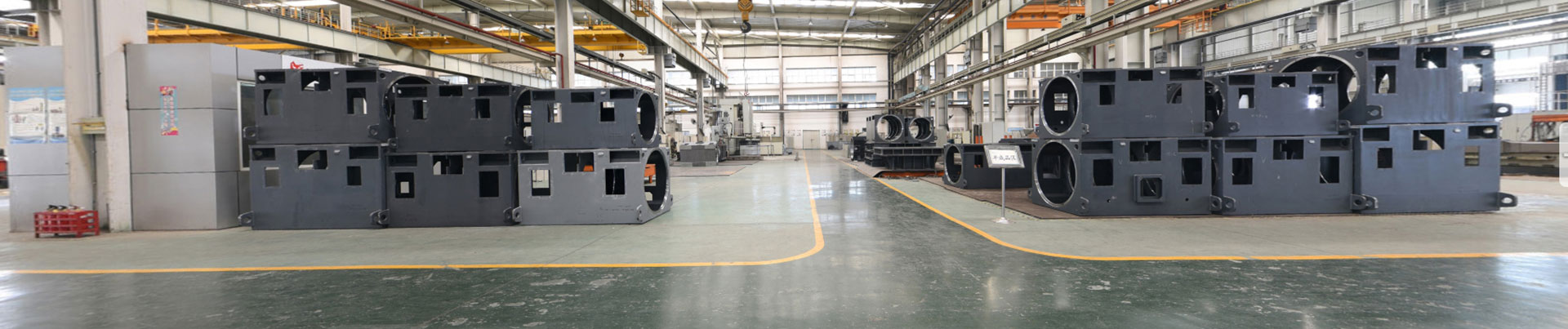
For PMSM Motor Manufacturers, the real OEM question is not simply which motor has a higher efficiency rating. Equipment builders must balance energy consumption, torque, operating stability, controller cost, maintenance, installation space, safety, and total lifetime cost. ZCL approaches this comparison from the purchasing group's perspective: which motor technology will deliver dependable machine performance without creating unnecessary design or service problems?
Search results for this topic generally focus on the same practical concerns: permanent magnet efficiency, induction motor durability, variable speed control, starting performance, heat management, maintenance, and application suitability. The following comparison turns those concerns into an equipment selection guide.
A permanent magnet synchronous motor, or PMSM, uses permanent magnets in the rotor to produce a constant magnetic field. The stator creates a rotating magnetic field, and the rotor follows it at synchronous speed.
The rotor does not need induced current to create its magnetic field.
Rotor copper losses are greatly reduced or eliminated.
The motor can maintain high efficiency across a broad operating range.
Electronic control is normally required for variable speed operation.
Rare earth magnets or other permanent magnet materials can increase material cost.
An induction motor, also called an asynchronous motor, uses a rotating stator field to induce current in the rotor. This induced current creates the rotor magnetic field needed to produce torque.
The rotor has a simple and robust construction.
The motor can operate directly from an AC power supply in many applications.
Rotor slip is necessary to produce torque.
Rotor losses increase heat generation and reduce efficiency compared with many PMSM designs.
Variable frequency drives can provide effective speed control and soft starting.
In practical terms, PMSM motors prioritize efficiency, compactness, and controlled performance. Induction motors prioritize proven construction, easy sourcing, service familiarity, and tolerance of demanding industrial conditions.
Two motors with the same rated power may perform very differently in an OEM machine. Purchasing teams should evaluate the normal load point, overload duration, speed range, duty cycle, ambient temperature, enclosure, and controller combination.
| Parameter | PMSM motor | Induction motor | OEM purchasing meaning |
|---|---|---|---|
| Typical efficiency | High, especially at partial load and variable speed | Good at rated load, usually lower at light load | PMSM can reduce operating electricity cost in equipment with long annual running hours |
| Power factor | Typically high with suitable control | Often lower, especially at light load | Induction systems may require more input current for the same useful output |
| Rotor losses | Very low compared with induction designs | Higher because current is induced in the rotor | Lower PMSM rotor loss can simplify thermal management |
| Starting method | Usually requires an inverter or dedicated controller | Can use direct-on-line starting, soft starting, or a variable frequency drive | Induction motors may reduce control system complexity in fixed-speed equipment |
| Speed regulation | Excellent with closed-loop or sensorless control | Good with a quality variable frequency drive, but slip remains | PMSM is useful where precise speed and repeatability affect product quality |
| Low-speed torque | Strong when correctly controlled | Depends heavily on drive settings and motor design | Drive and motor matching is critical for conveyors, pumps, compressors, and robotics |
| Power density | Usually high | Usually lower for the same continuous output | PMSM can reduce machine size and free space for other components |
| Thermal behavior | Generally lower internal rotor heating, but magnets require temperature protection | More rotor heat and potentially greater total thermal loss | Both technologies need correct cooling and overload protection |
| Maintenance | Low mechanical maintenance, with greater dependence on electronics | Simple motor construction and widely available service skills | Induction motors may be easier to repair in remote or less automated facilities |
| Initial system cost | Often higher because of magnets and the controller | Often lower, especially for standard fixed-speed models | Purchase price should be compared with energy, service, and replacement costs |
| Control dependency | High in most OEM applications | Low for fixed-speed operation and moderate with variable speed control | OEMs must budget for programming, commissioning, and spare drive support |
A motor rarely operates at its rated load for the entire production cycle. A machine may run at 30 percent load for long periods, accelerate frequently, or alternate between standby and full output.
For long periods of partial-load operation, PMSM efficiency is often more attractive.
For short operating hours, the energy savings may not justify the higher initial system cost.
For frequent acceleration and deceleration, controller performance and thermal design are as important as motor efficiency.
For constant full-load operation, both motor types can deliver reliable results when correctly sized.
The purchasing group should request efficiency data at several operating points rather than relying only on the rated efficiency value.
Neither a PMSM nor an induction motor contains a battery. However, when either motor is used in battery-powered equipment, motor efficiency directly affects battery runtime. This matters in automated guided vehicles, electric forklifts, mobile pumps, compact cleaning machines, warehouse equipment, and other portable systems.
A PMSM can deliver more mechanical output from the same battery energy when the motor and inverter are properly matched.
Lower heat loss can reduce cooling demand and preserve energy for useful work.
Longer operating time can reduce charging frequency and improve equipment availability.
Actual runtime still depends on battery capacity, tire or mechanical resistance, payload, acceleration, terrain, controller settings, and ambient temperature.
Induction motors can still be suitable for battery-powered equipment when cost, service simplicity, or existing drive compatibility is more important than maximum runtime. The correct comparison should use a complete machine test with the same battery, payload, duty cycle, and ambient conditions.
Purchasers often describe stability as smooth acceleration, consistent speed, low vibration, predictable temperature, and reliable operation after thousands of cycles. Motor type influences these results, but it does not determine them alone.
A well-matched PMSM and inverter can provide:
Stable speed under changing loads.
Low torque ripple when the control algorithm and motor design are properly optimized.
Fast dynamic response for servo-like applications.
Lower operating temperature in many continuous-duty conditions.
Consistent performance during repeated acceleration and deceleration.
A correctly selected induction motor and variable frequency drive can provide:
Reliable operation in harsh industrial environments.
Predictable performance with widely available drive technology.
Good overload capability when the motor is correctly sized.
Simple replacement using common industrial specifications.
Stable operation in applications where high precision is not required.
In field use, PMSM stability can be reduced by poor rotor position estimation, incorrect motor parameters, demagnetization caused by excessive temperature, or an unsuitable inverter. Induction motor stability can be reduced by voltage imbalance, drive tuning errors, excessive slip, bearing problems, or insufficient cooling.
PMSM equipment may achieve low noise and vibration because it avoids some rotor slip and can offer precise torque control. This is valuable in medical equipment, laboratory instruments, precision conveyors, HVAC systems, and indoor automation.
Induction motors are also capable of quiet operation, especially when paired with a good drive and balanced mechanical assembly. However, motor construction, switching frequency, bearing quality, rotor balance, mounting stiffness, and load alignment often have a greater effect than motor category alone.
Higher efficiency across a broad operating range in many designs.
Strong power density for space-constrained machines.
High power factor with suitable control.
Excellent speed regulation and dynamic response.
Lower rotor losses and potentially lower operating temperature.
Good suitability for battery-powered systems.
Reduced energy cost in high-duty-cycle applications.
Strong potential for quiet and smooth operation.
Higher initial motor and controller cost in many cases.
Dependence on an inverter or specialized drive system.
More demanding commissioning and parameter configuration.
Magnet temperature limits and demagnetization risk if protection is inadequate.
Greater sensitivity to incorrect control settings.
Potential exposure to permanent magnet material price changes.
Repair and replacement may require more specialized technical support.
Some designs may create additional braking or back electromotive force considerations during service.
Simple and rugged rotor construction.
Broad availability in standard industrial frame sizes.
Lower initial purchase cost in many fixed-speed applications.
Large global base of technicians, suppliers, and replacement parts.
Good tolerance of demanding industrial environments.
No permanent magnets and no demagnetization concern.
Easy integration with direct-on-line starters, soft starters, and variable frequency drives.
Strong suitability for pumps, fans, compressors, conveyors, and general machinery.
Lower efficiency at light load and some variable speed operating points.
Higher rotor losses and heat generation.
Lower power density for comparable continuous output in many designs.
Less precise speed regulation because of slip.
Higher input current or lower power factor under certain conditions.
Potentially greater cooling requirements in continuous high-load operation.
Less attractive for applications where battery runtime and compact packaging are critical.
The motor purchase price is only one part of the cost. A motor that runs 4,000 to 8,000 hours per year can accumulate substantial energy costs, particularly when it operates at partial load or variable speed.
Record the rated motor power and actual mechanical load.
Measure the average operating hours per day and per year.
Identify the percentage of time spent at each speed and load point.
Compare complete system efficiency, including the motor, inverter, gearbox, and cooling equipment.
Multiply expected energy savings by the local electricity price.
Compare the energy savings with the PMSM premium and expected maintenance costs.
PMSM is often financially attractive when the machine operates for long hours, uses variable speed, has strict energy targets, or runs on a limited battery. Induction motors may remain the better economic choice for low-duty, fixed-speed, or cost-sensitive equipment.
Purchasing groups should ask how a failure will affect the production line. A lower-cost motor can become expensive if it causes extended downtime or requires difficult troubleshooting.
Check whether local technicians can commission and repair the selected drive system.
Confirm the availability of replacement motors, inverters, encoders, bearings, and cables.
Ask about technical support during prototype testing and mass production.
Review expected bearing life and cooling requirements.
Determine whether the motor requires an encoder or can operate with sensorless control.
Define spare-part requirements before approving the design.
Calculate the cost of lost production during a motor or controller failure.
PMSM is usually a strong candidate for OEM equipment with demanding energy, space, and control requirements.
Battery-powered vehicles and mobile industrial equipment.
Automated guided vehicles and warehouse robots.
Electric forklifts and traction systems.
High-efficiency pumps and fans with long annual operating hours.
Compressors with broad variable speed ranges.
Servo-like conveyors and precision motion systems.
Medical, laboratory, and low-noise equipment.
Compact HVAC and refrigeration systems.
Equipment with strict carbon reduction or energy efficiency targets.
PMSM is particularly valuable when every millimeter of packaging space matters or when a small efficiency improvement produces a meaningful increase in battery runtime and daily machine availability.
Induction motors remain an excellent choice for many OEM machines where ruggedness, availability, and straightforward service are the primary requirements.
Fixed-speed pumps and fans.
General-purpose conveyors.
Industrial blowers and exhaust equipment.
Standard compressors with limited speed variation.
Heavy-duty machinery in dusty or harsh environments.
Equipment sold in regions with limited specialized drive support.
Low-duty-cycle machines where energy savings have a long payback period.
Systems that already use a standardized induction motor and drive platform.
Induction motors are not an outdated option. Their mature manufacturing base, simple rotor design, and broad service network can reduce project risk for many equipment builders.
Define the required torque-speed curve rather than selecting only by kilowatt rating.
Identify the minimum and maximum operating speeds.
Record acceleration time, braking frequency, and overload requirements.
Calculate annual running hours and expected battery runtime if applicable.
Check available voltage, current, and controller interfaces.
Evaluate ambient temperature, dust, moisture, vibration, and installation altitude.
Compare motor dimensions, shaft configuration, mounting method, and cooling arrangement.
Request test data at the actual operating points.
Assess local service capability and spare-part availability.
Run a total cost and risk review with engineering, purchasing, production, and after-sales teams.
A PMSM should not be purchased as an isolated component. The motor, inverter, feedback device, wiring, protection functions, and control software must work as one system.
What inverter models have been validated with the motor?
Is sensorless control sufficient for the application?
Is an encoder or resolver required for low-speed torque?
What motor parameters must be entered into the drive?
How is overtemperature and demagnetization risk controlled?
What is the maximum safe speed and short-term overload duration?
How are braking energy and regeneration managed?
What commissioning tools and technical documents are provided?
Purchasing teams should request more than a catalog efficiency number. Reliable OEM sourcing depends on repeatable production quality and transparent test methods.
Efficiency and power factor curves at multiple loads.
Torque-speed curves and overload capability.
Temperature rise data under continuous and intermittent duty.
Vibration and noise test results.
Insulation, surge, and high-voltage test standards.
Bearing life expectations and lubrication requirements.
Rotor balance and dimensional tolerance information.
Environmental protection ratings and cooling requirements.
Sample testing under the OEM machine's real load profile.
Quality control procedures for magnets, windings, shafts, and final assembly.
These questions also apply when evaluating induction motor suppliers. A mature motor category does not remove the need to verify thermal performance, bearing life, drive compatibility, and production consistency.
Choose PMSM when most of the following conditions apply:
The equipment operates for long hours each year.
The load varies significantly or the motor spends substantial time below rated load.
Battery runtime directly affects productivity.
Available installation space is limited.
Precise speed, fast response, or smooth torque is important.
Energy efficiency regulations or customer specifications are strict.
The OEM can support inverter commissioning and parameter management.
The expected energy savings justify the higher initial system cost.
Choose an induction motor when most of the following conditions apply:
The machine runs at a constant speed.
Annual operating hours are relatively low.
The equipment operates in a harsh environment.
Standard replacement parts are essential.
Local maintenance teams are more familiar with induction systems.
The project has a strict initial cost target.
A direct-on-line starter or standard drive is sufficient.
The energy savings from PMSM would not achieve an acceptable payback period.
Many equipment manufacturers do not need to choose one motor technology for every product. A standard induction platform can serve entry-level or fixed-speed models, while a PMSM platform can support premium, battery-powered, compact, or high-efficiency models.
This approach can reduce development risk while allowing the OEM to offer different price and performance levels. It also lets the purchasing team build supplier capability gradually instead of changing every product platform at once.
PMSM usually offers the stronger technical value when efficiency, battery life, compact design, low operating temperature, and precise control are central to the product. Its higher system complexity should be addressed through proper inverter matching, thermal protection, commissioning support, and supplier validation.
Induction motors remain the practical choice when the equipment needs a proven construction, broad service availability, standard components, and low initial cost. Their lower efficiency and larger size may be acceptable when operating hours are limited or when the application does not require precise variable speed performance.
The best choice is the motor that meets the complete machine duty cycle at the lowest acceptable lifetime risk. OEMs should compare measured performance, not marketing claims, and should evaluate the motor, controller, mechanical load, cooling system, and service plan as a complete package.
ZCL supports equipment builders that need a clear comparison between PMSM and induction motor solutions. By reviewing torque, speed range, battery runtime, stability, thermal behavior, total cost, and application requirements with experienced PMSM Motor Manufacturers, purchasing teams can select the technology that delivers dependable performance throughout the equipment life cycle.
Copyright © ZCL Shijiazhuang Electric Motor Technology Co.,Ltd. All Rights Reserved | Sitemap | Powered by