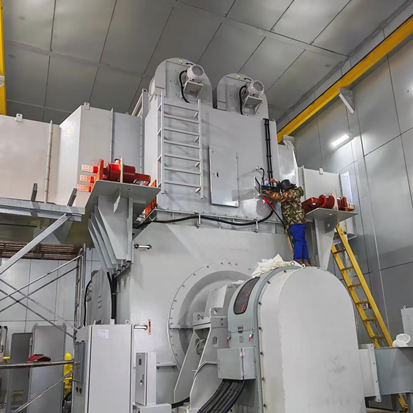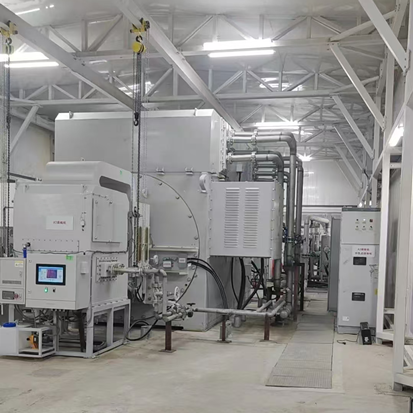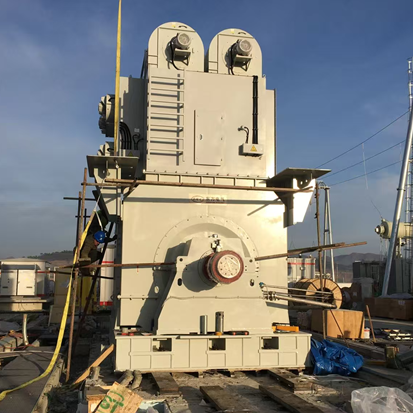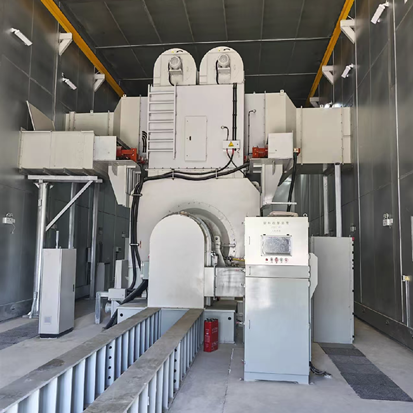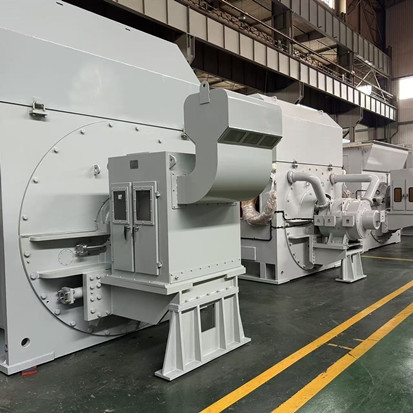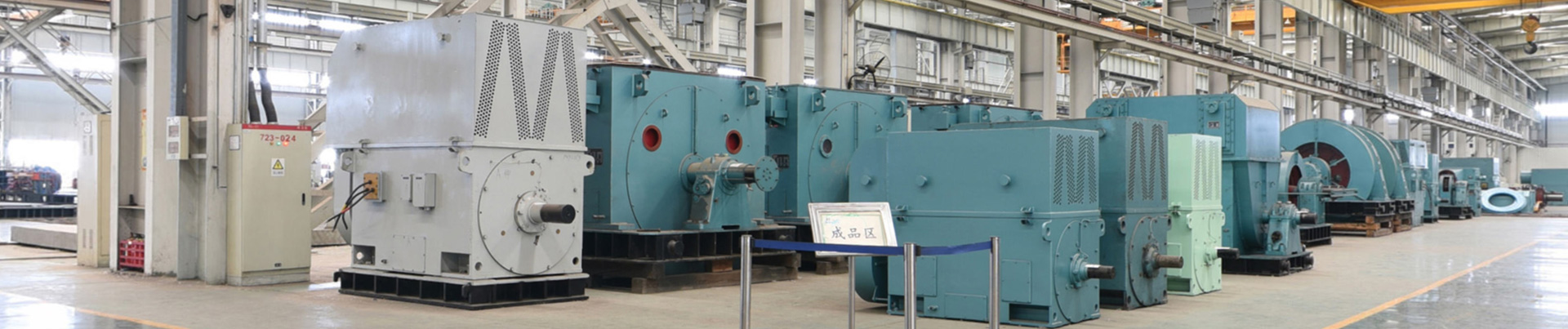
The distributed Synchronous Motor Condenser is a key grid-supporting device designed to enhance voltage stability, increase short-circuit capacity, and provide fast reactive power compensation in modern power systems with high penetration of renewable energy.
A Synchronous Motor Condenser is a synchronous machine operating as a reactive power compensation device, functioning similarly to a synchronous condenser. It is used in power systems to regulate voltage, improve power factor, and provide dynamic reactive power support without delivering mechanical output.
It plays a critical role in modern power systems with high renewable energy penetration, where grid stability and inertia support are increasingly important.
A synchronous motor condenser is essentially a synchronous motor running without mechanical load, operating in a controlled excitation state to:
Generate reactive power (capacitive mode)
Absorb reactive power (inductive mode)
Support voltage regulation and grid stability
Unlike conventional motors used for mechanical work, this machine is dedicated to electrical system support functions.
The operation is based on excitation control:
Machine supplies reactive power to the grid
Helps increase system voltage
Acts as a capacitive power source
Machine absorbs reactive power from the grid
Helps reduce system voltage
Acts as an inductive load
Operates near unity power factor
Maintains grid balance
This controllability makes it highly valuable in dynamic power systems.
The synchronous motor condenser is widely used in electrical grids for:
Maintains stable voltage levels in transmission and distribution networks.
Balances reactive power demand in industrial and utility systems.
Enhances system strength in weak grids.
Reduces losses and improves energy efficiency.
Provides short-term fault current contribution for protection systems.
Currently, renewable energy power stations suffer from weak active support capabilities, low short-circuit ratios at multiple stations, and abnormal sensitivity to voltage fluctuations. According to the mandatory national standard "Guidelines for the Safety and Stability of Power Systems" (GB 38755-2019), "in areas with a high proportion of renewable energy grid-connected power generation, renewable energy power stations should provide necessary inertia and short-circuit capacity support." The National Energy Administration's "Regulations on the Management of Power Grid Connection Operation" (Guonengfa Jianguan Gui (2021) No. 60) requires that "the short-circuit ratio of renewable energy power stations should reach a reasonable level."
The multiple renewable energy station short-circuit ratio (MRSCR) can reflect the voltage support strength at renewable energy grid connection points, effectively guiding the development and operation of the power grid and renewable energy. The national standard "Specification for Safety and Stability Calculation of Power Systems" (GB/T40581-2021) stipulates that: "For the case of multiple power plants connected to the AC system, the short-circuit ratio of multiple power plants on the low-voltage side of the step-up transformer of the new energy power generation unit should not be lower than 1.5, and the short-circuit ratio of multiple power plants at the grid connection point of the new energy should not be lower than 2.0 and should preferably be higher than 3.0."
《Guidelines for Power System Safety and Stability》GB38755-2019
《Specifications for Power System Safety and Stability Calculation》 GB/T40581-2021
《Technical Regulations for Wind Farm Access to Power Systems》 GB/T19963.1-2021
《Technical Code for Power System Design》 DL/T5429-20092
《Technical Guidelines for Reactive Power Compensation and Voltage Regulation Design of Power Systems》 DL/T5554-2019
《Code for Design of Substation Monitoring Systems》 DL/T5149-2020
《Technical Code for Substation General Layout Design》 DL/T5056-2007
《Code for Design of Small Thermal Power Plants》 GB50049-2011 ;
《Guidelines for Abnormal and Special Operation and Maintenance of Large Steam Turbine Generators》 (DL/T970-2005);
《Design Code for 35kV~220kV Unmanned Substations》 (DL/T5103-2012);
《Technical Code for Design of 220kV~750kV Substations》 (DL/T5218-2012);
《Code for Overvoltage Protection and Insulation Coordination Design of AC Electrical Installations》 (GB/T50064-2014);
《Design of Secondary Wiring for Thermal Power Plants and Substations》 (DL/T5136-2012);
《Code for Design of Relay Protection and Automatic Devices for Power Installations》 (GB/T50062-2008);
《Code for Design of Electrical Measuring Instruments for Power Installations》 (GB/T50063-2017);
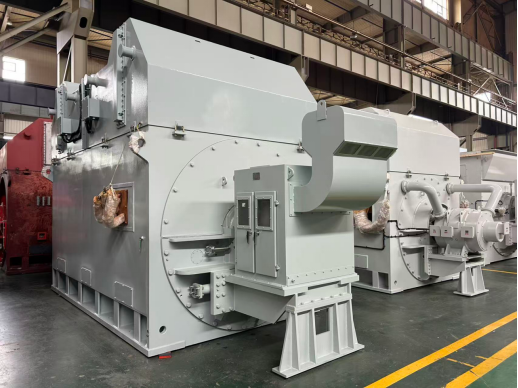
The main performance characteristics of synchronous condensers are:
(1) Overload capacity and minimal impact of system voltage on reactive power output. Under strong excitation, it can generate reactive power exceeding its rated capacity for a short time and provide strong reactive power support for faults lasting for extended periods.
(2) Increased short-circuit current. During a fault, the synchronous condenser will output a large reactive current to the system, improving the short-circuit capacity of weak systems.
(3) Good operational stability; mature synchronous condenser equipment exhibits good operational stability.
(4) Long service life, 30-50 years.
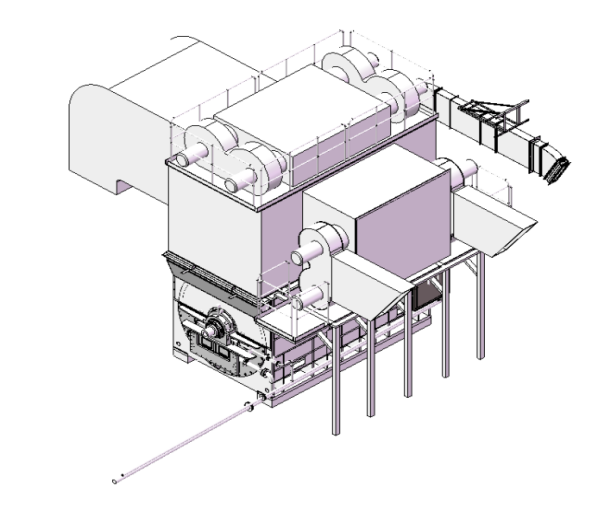
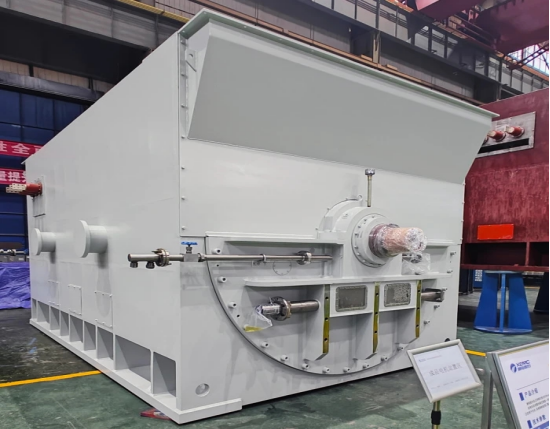
(5) Highly integrated main unit design, compact structure, relatively small footprint, and easy installation and transportation.
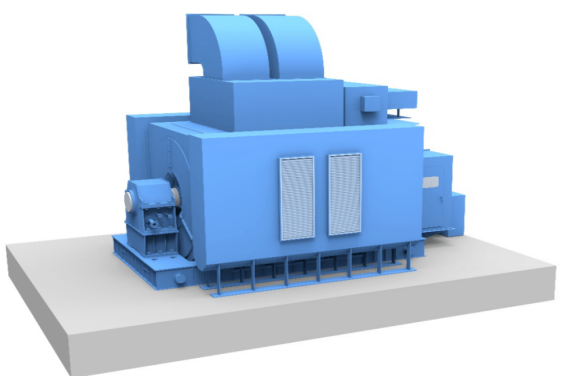
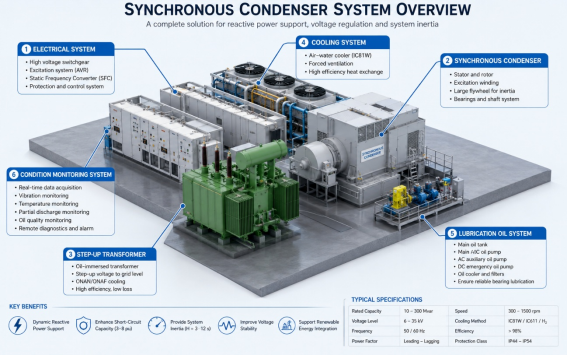
A distributed synchronous condenser system mainly consists of:
• Synchronous condenser main unit
• Lubricating oil system
• Cooling system
• Step-up transformer
• Plant power supply
• Variable frequency drive (VFD) starting system
• Excitation and protection system
• Intelligent monitoring system
With increasing renewable energy integration, power systems face:
Reduced system inertia
Voltage instability
Weak grid conditions
Rapid load fluctuations
The synchronous motor condenser helps solve these issues by providing:
Rotational inertia support
Voltage stabilization
Reactive power balancing
Grid strength improvement
Operating Mode: Synchronous condensers are mainly used to generate or absorb reactive power, and absorb a small amount of active power; they do not have a prime mover. Steam turbine generators mainly generate active power, while simultaneously generating or absorbing a small amount of reactive power.
* **Starting Method:** Synchronous condensers are started by an external power supply, such as SFC low-frequency drive, while steam turbine generators are driven to 3000 r/min by a prime mover.
* **Excitation Method:** Synchronous condensers require continuous excitation from the low-frequency drive process until normal grid connection, and the excitation method differs before and after grid connection. Steam turbine generators are excited only after reaching rated speed, a simpler process than that of synchronous condensers.
Synchronous condensers possess the capability for long-term stable operation with both lagging and leading phases within a range not less than their rated capacity.
Synchronous condenser units meet the relevant requirements of the power grid regarding the grid-connected performance testing of synchronous condensers (such as actual measurement modeling of the excitation system, reactive power adjustment, and dynamic performance verification).
The parameters of the 50MVar synchronous condenser are as follows:
(1) Excitation multiple: 3.5 times the excitation voltage (at 0.8Un);
(2) Stator overload capacity: not less than 3.5 times the rated stator current for 15s; rotor overload capacity: not less than 2.5 times the rated excitation current for 15s;
(3) Short-circuit ratio: Kc > 1.0;
(4) Direct-axis short-circuit time constant Td’ < 0.95s;
(5) Stator overvoltage: The synchronous condenser has a certain overvoltage tolerance capability and a strong ability to suppress overvoltage; when the step-up transformer bus voltage suddenly increases to 1.3p.u., the synchronous capacitor bank's continuous operating time is not less than 1s;
(6) The steady-state voltage operating range of the synchronous condenser is not less than 0.925p.u.-1.075p.u.;
(7) The system frequency variation range is 48Hz to 52Hz. When the system frequency reaches 55Hz, the synchronous condenser has the ability to operate stably for a long time with steady-state reactive power output; when the system frequency reaches 55Hz, the synchronous condenser has the ability to operate for 30s; when the system frequency reaches 60Hz, the synchronous condenser has the ability to withstand at least five continuous 200ms operation at 60Hz within its life cycle;
(8) The synchronous condenser's continuous overexcitation capability (V/Hz) is not less than 1.1;
(9) The short-circuit capacity provided by the synchronous condenser to the system is not less than 5 times its rated capacity;
(10) The synchronous condenser's direct-axis open-circuit time constant Td0’ is not greater than 8s;
(11) The synchronous condenser's inertial time constant Tj is not less than 4s;
(12) The synchronous condenser's direct-axis subtransient reactance is not greater than 10%;
(13) The synchronous condenser can achieve automatic start-up, driven by a current source inverter, and does not cause large fluctuations in station power consumption during the start-up process, and does not affect 35 Other equipment on the kilovolt busbar is safe; (14) Synchronous condenser can meet the high initial response energy requirements of the excitation system.
| Parameter | 10MVAr | 20MVAr | 30MVAr | 50MVAr |
| Stator rated voltage (kV) | 10.5 | 10.5 | 10.5 | 10.5 |
| reactive power range | -10~10 | -20~20 | -30~30 | -50~50 |
| Rated loss (kW) | ≤200(2.0%SN) | ≤400(2.0%SN) | ≤540(1.8%SN) | ≤800(1.6%SN) |
| Short-circuit ratio | 1.17(≮1.0) | 1.08(≮1.0) | 1.10(≮1.0) | 1.18(≮1.0) |
| Direct-axis ultratransient reactance X”d (%) | 8.34(<10) | 8.87(<10) | 6.91(<10) | 6.72(<10) |
| Direct axis open circuit time constant T’d0 (s) | 6.291(<8) | 6.75(<8) | 6.75(<8) | 5.18(<8) |
| Direct-axis short-circuit transient time constant Td’(s) | 0.74(<0.8) | 0.78(<0.8) | 0.85(<0.9) | 0.57(<0.7) |
| Inertial time constant Tj (s) | 4.12(≮4) | 4.05(≮4) | 4.08(≮4) | 4.24(≮4) |
| Overvoltage capability | ≥1.3 times , Lasts 1 second | |||
| Stator overcurrent | ≥3.5 times , No less than 15 seconds | |||
| Rotor excitation capability | ≥3.5 times the rated excitation voltage, 2.5 times the rated excitation current for 15 seconds | |||
| item | 20MVAr synchronous condenser | 50MVAr synchronous condenser |
| Total stator weight (t) | 41 | 90 |
| Rotor weight (t) | 12 | 20 |
| Overall transport weight of stator and rotor (t) | 60 | 120 |
| Overall transport dimensions of stator and rotorL×W×H(mm) | 6400×2850×2300 | 7000×3800×3000 |
| The main engine compartment has a footprint of L × W (m). | 23×7 | 27×8 |
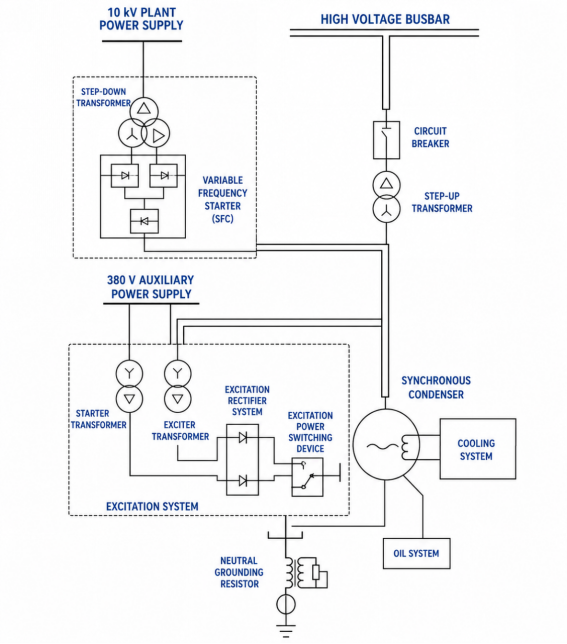
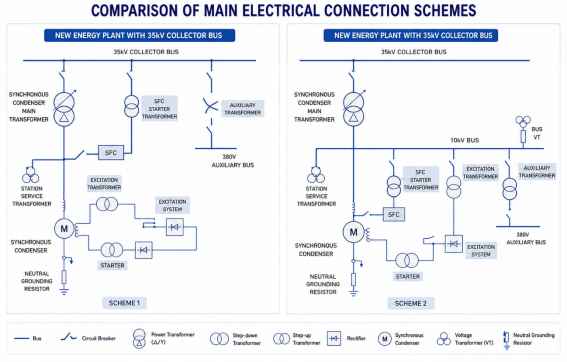
The synchronous condenser system can utilize two station auxiliary power supplies, drawn from different busbar sections of the 35 kV distribution unit within the station. Two no-load tap-changing dry-type transformers (10.5±2×2.5%/0.4 kV, Dyn11, Ud=8%) are installed as station auxiliary power transformers and as the working power supply for the synchronous capacitor bank. The two low-voltage dry-type transformers serve as backups for each other.
By taking measures to reduce the station auxiliary power load of the synchronous condenser station, and combining this with the station auxiliary transformer configuration and optimization, the synchronous condenser station can be reduced to one auxiliary transformer or even eliminated from the need for a new auxiliary transformer, fully utilizing the auxiliary transformer capacity and saving energy.
The SFC (Synchronous Filtering Unit) equipment is the main harmonic source connected to the 35/10 kV station auxiliary system of the synchronous condenser. The design considers adding SFC filters or increasing the pulse count to reduce the harmonic impact of the SFC on the power grid to meet national standards.
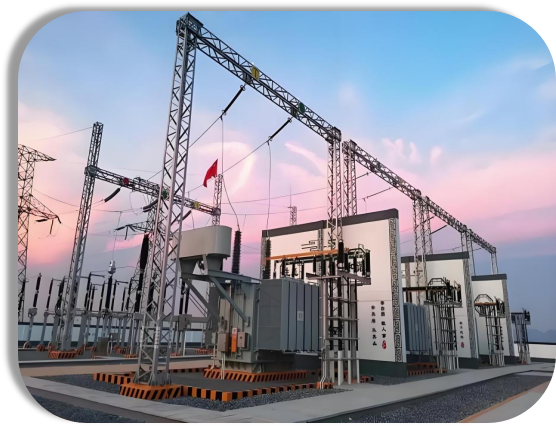
Synchronous capacitor banks typically use a "synchronous capacitor bank-transformer bank" unit connection. Distributed synchronous capacitor banks with a capacity not exceeding 50MVar are generally connected to the 35 kV busbar of the substation via a 35 kV voltage level.
To reduce investment and land area, it is recommended that distributed synchronous capacitor banks with a capacity not exceeding 50MVar not have an outlet circuit breaker. The synchronous capacitor bank and the main transformer are connected via an enclosed busbar, and the main transformer and the 35 kV distribution equipment are connected by cables.
| No | Subsystem | Function | Secondary control and protection equipment |
| 1 | Startup and Operation System | Achieve variable frequency start-up, synchronous grid connection, and rapid control of reactive power output for synchronous capacitor banks. | Static Frequency Converter (SFC)Intelligent Excitation SystemQuasi-Synchronizer |
| 2 | Protection System | Ensure safe and stable operation of the units. | Synchronous Transformer ProtectionNon-electrical Quantity Protection |
| 3 | Monitoring and Communication System | Achieve automated operation, unattended or minimally staffed operation of synchronous capacitor banks. | Process Control SystemFault Recording SystemSynchronous Phasor Measurement System |
| 4 | Other Subsystems | Power supply system, power distribution system, etc. | 110V/220V DC Power Supply Panel, 380V Distribution Cabinet10kV/35kV Station Service Transformer, Switchgear |
Copyright © ZCL Shijiazhuang Electric Motor Technology Co.,Ltd. All Rights Reserved | Sitemap | Powered by