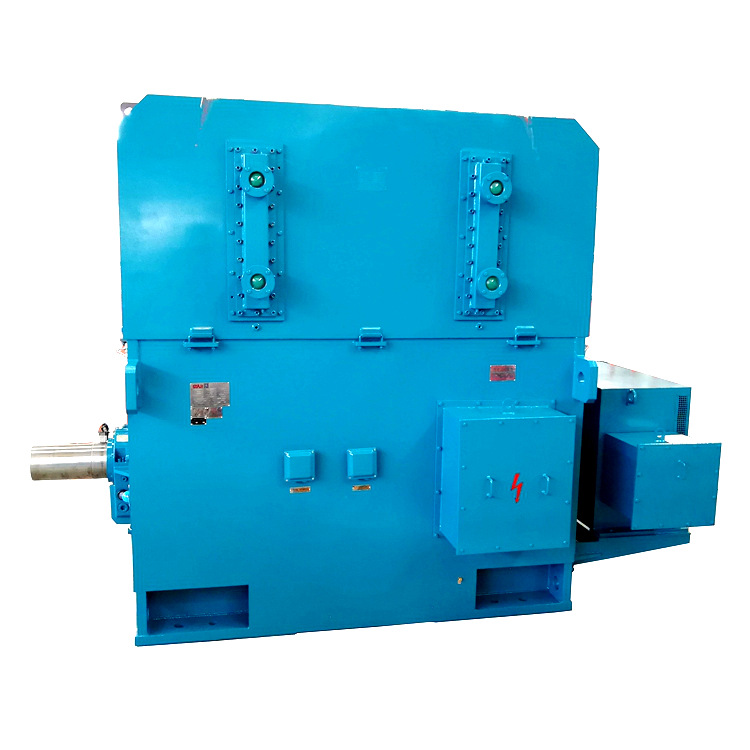
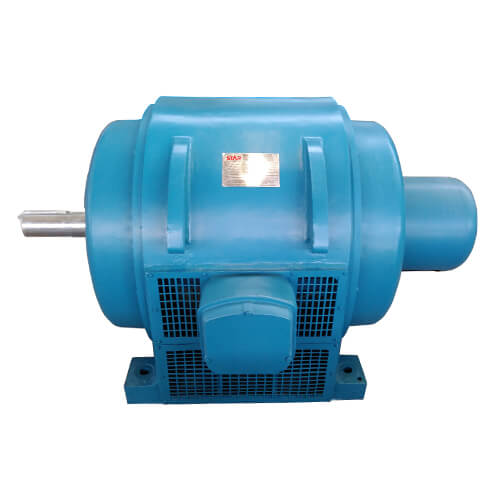
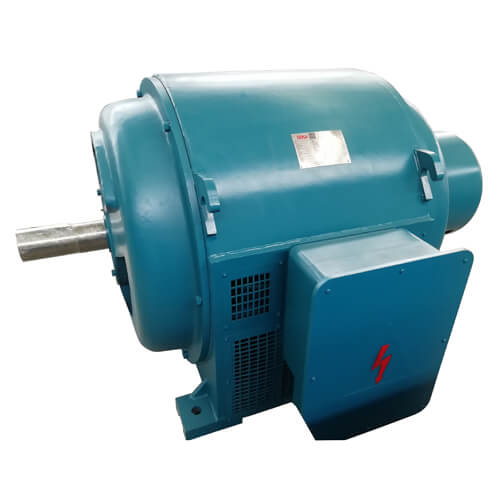
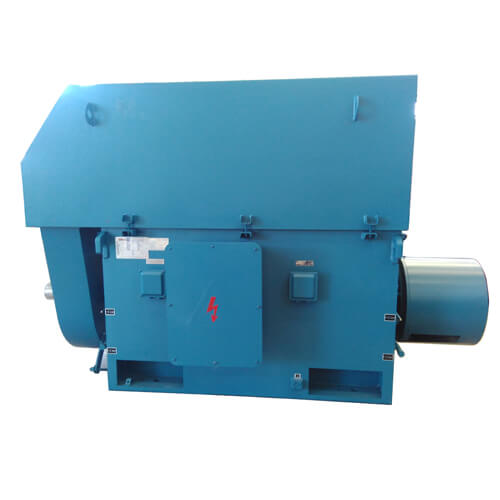
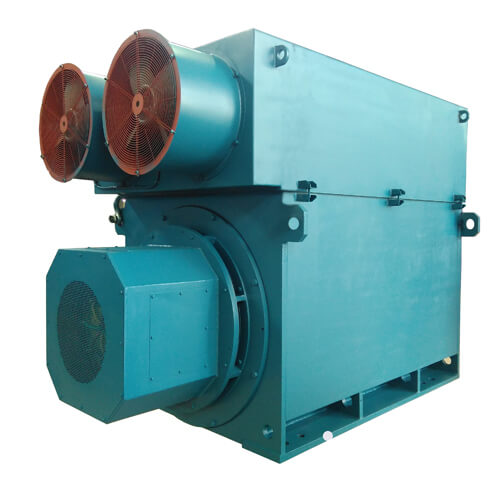
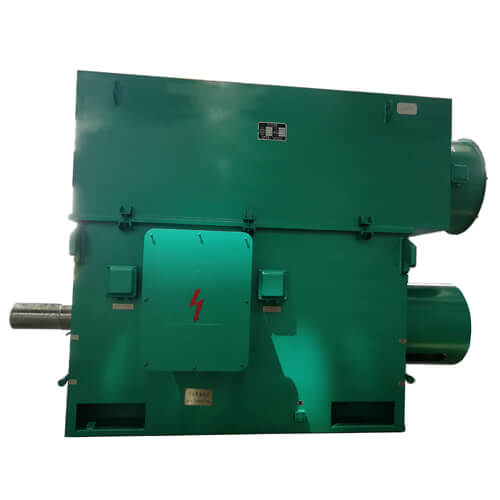
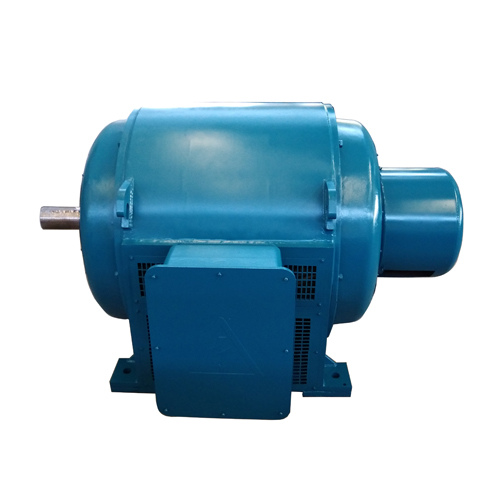
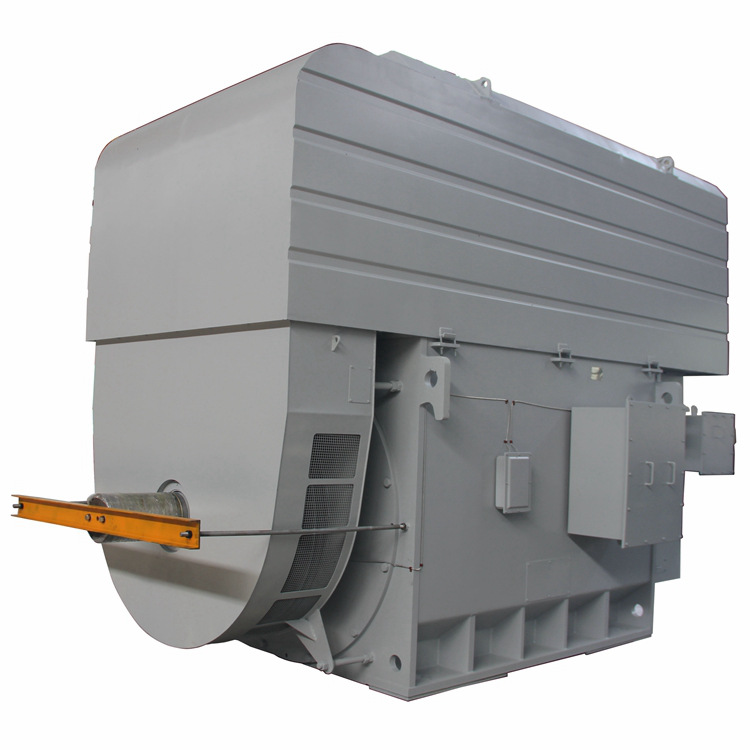
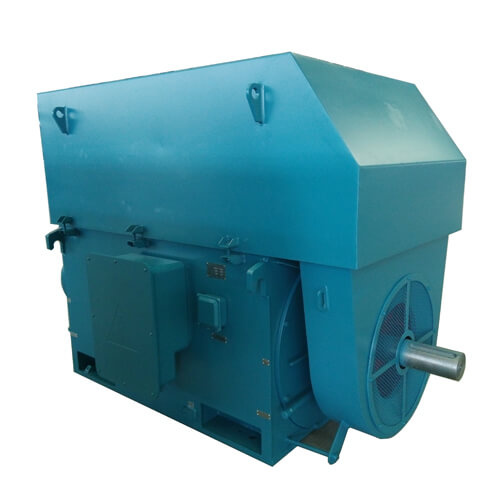
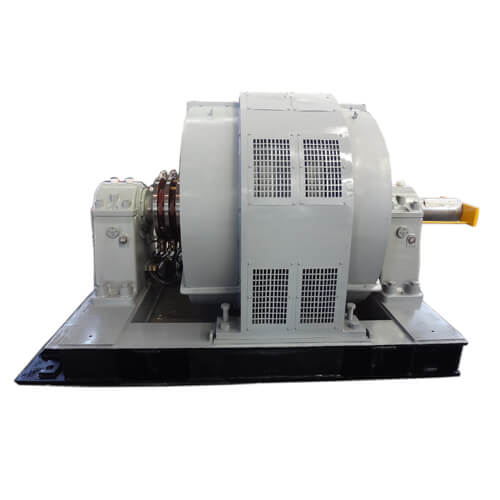
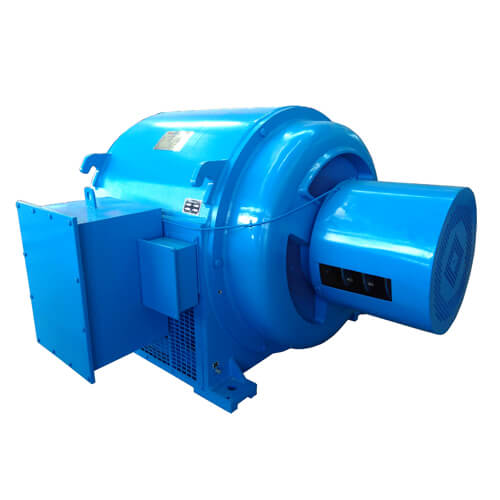
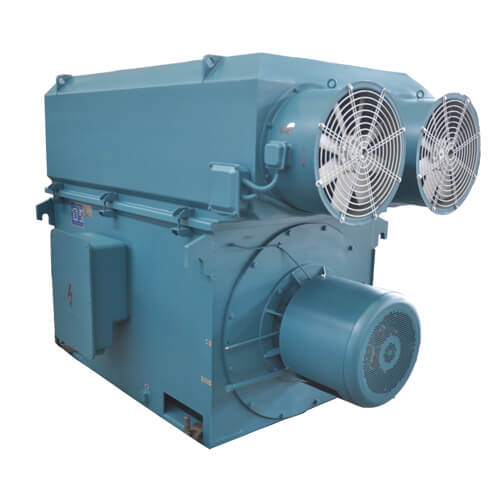
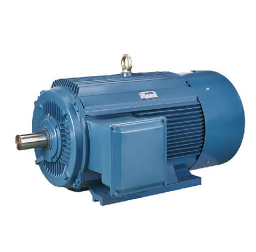
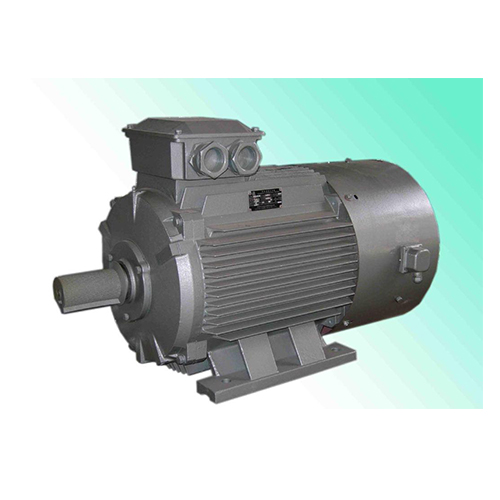
Our high voltage slip ring motors are engineered for industrial equipment requiring high starting torque, controlled starting current and reliable acceleration of heavy-inertia loads. Also known as high voltage wound rotor motors, these motors are widely used where a standard squirrel-cage motor may place excessive demand on the electrical network during startup.
The wound rotor is connected to an external resistance system through slip rings. By introducing resistance into the rotor circuit during startup, the motor can develop strong accelerating torque while controlling the current drawn from the power supply. The resistance is progressively reduced as the motor approaches its operating speed.
High voltage slip ring induction motors are particularly suitable for mills, crushers, conveyors, compressors, large fans and other equipment that must start under load or accelerate a high-inertia mechanical system.
| Parameter | Available Configuration |
|---|---|
| Motor type | Three-phase wound rotor induction motor |
| Rated power | |
| Rated voltage | |
| Frequency | 50 Hz, 60 Hz or project-specific |
| Number of poles | |
| Mounting | Horizontal or vertical |
| Protection | |
| Cooling | Air-cooled, air-to-air or air-to-water options |
| Insulation | |
| Bearings | Rolling-element or sleeve bearings |
| Starting system | Rotor resistance starter or customer-specified system |
| Standards | IEC, NEMA |
| Customization | Electrical and mechanical customization available |
Final ratings depend on the driven equipment, load inertia, starting frequency, acceleration time, power-system capacity and environmental conditions.
Heavy industrial equipment may require substantial torque before it begins to rotate. Ball mills, crushers, loaded conveyors and large fans are typical examples.
A slip ring motor can introduce external resistance into the rotor circuit during startup. This allows the starting torque characteristic to be adapted to the driven equipment and helps the motor accelerate a demanding load.
Direct-on-line starting of a large squirrel-cage motor may produce a high inrush current. On a weak industrial network, this can cause an unacceptable voltage drop or affect other electrical equipment.
A wound rotor motor provides a way to limit starting current while maintaining the torque required to accelerate the load.
Large mills, fans, centrifuges and conveyors may take considerable time to reach full speed.
By selecting appropriate rotor resistance steps, the motor can accelerate the load progressively. Smooth acceleration helps reduce sudden torque shocks on couplings, gearboxes, shafts and the driven equipment.
Some machinery cannot always be completely unloaded before starting. A high voltage wound rotor motor can be engineered for applications that require startup with material, pressure or mechanical resistance already present.
When an application requires strong starting performance but normally runs at a fixed operating speed, a slip ring motor and rotor starter may provide a practical alternative to a complete medium-voltage variable-frequency drive system.
The final choice should consider starting frequency, speed-control requirements, energy consumption, maintenance capability and total system cost.
The stator of a high voltage slip ring motor is connected to the three-phase power supply. The rotor contains a three-phase winding whose terminals are connected to slip rings mounted on the shaft.
During startup:
External resistance is connected to the rotor circuit.
The motor develops the required starting torque.
Starting current is controlled according to the system design.
Rotor resistance is reduced in stages as speed increases.
The rotor circuit is short-circuited when the motor reaches operating speed.
The motor continues to run as an induction motor.
The starter may use a liquid resistance system, grid resistance bank or another application-specific rotor-control method.
Grinding mills combine high rotational inertia with demanding breakaway torque. The motor, starter, coupling and mill load must be evaluated as a complete drive system.
Important project information includes mill type, loaded starting condition, total rotating inertia, required acceleration time and number of starts per hour.
Slip ring motors are commonly considered for cement-production equipment where reliable starting is required under dusty conditions.
Cooling, enclosure protection, bearing seals and maintenance access should be selected according to the actual installation environment.
Crushers may experience high breakaway torque, variable load and occasional material blockage. The motor design should consider both normal startup and abnormal operating conditions.
Long or fully loaded conveyors require controlled acceleration to reduce belt stress and mechanical shock.
The motor and starter should be selected using conveyor length, slope, belt load, inertia and acceleration requirements.
Large fans may have high rotating inertia even when the steady-state torque demand is moderate.
A high voltage slip ring motor can provide controlled fan acceleration without imposing excessive current demand on the electrical supply.
Compressor starting requirements depend on compressor type, inlet condition, pressure, unloading system and operating cycle.
A complete torque-speed curve should be supplied when evaluating a slip ring motor for a compressor.
Selected hoisting and material-handling systems require high torque, frequent starts or controlled acceleration.
Duty cycle, braking, reversing and safety requirements must be reviewed before motor selection.
| Comparison | Slip Ring Motor | Squirrel-Cage Motor |
| Rotor construction | Wound rotor with slip rings | Rotor bars permanently short-circuited |
| Starting torque | Can be adjusted using external resistance | Determined mainly by motor and starting method |
| Starting current | Can be limited through rotor resistance | May be high with direct-on-line starting |
| High-inertia starting | Particularly suitable | Requires careful motor and starter selection |
| Maintenance | Brushes and slip-ring system require inspection | Generally lower rotor maintenance |
| Speed control | Limited control possible through rotor circuit | Commonly controlled by VFD |
| Initial system design | Includes rotor starter and resistance system | Usually simpler motor construction |
| Typical use | Mills, crushers, loaded conveyors and heavy starts | Pumps, fans, compressors and general industrial drives |
A squirrel-cage motor may be the preferred option when starting requirements are moderate and minimum maintenance is the primary goal. A slip ring motor becomes especially valuable when the load requires high torque, low starting current or controlled acceleration.
The rotor starter is a critical part of the complete slip ring motor system.
A liquid resistance starter changes rotor resistance through an electrolyte system. It is commonly considered for large motors requiring smooth acceleration over an extended starting period.
Project evaluation should include:
Rotor voltage
Rotor current
Required starting torque
Load inertia
Acceleration time
Starts per hour
Ambient conditions
Starter installation location
A grid resistance starter uses metallic resistor elements and staged switching to reduce rotor resistance as the motor accelerates.
It may be selected when defined resistance steps and a robust industrial structure are required.
Selected motors can be evaluated with a brush-lifting mechanism. After startup, the rotor circuit is short-circuited and the brushes may be lifted from the slip rings.
This option can reduce continuous brush contact, but it increases the mechanical complexity of the slip-ring system and must be matched to the maintenance strategy.
The cooling system should be selected according to motor power, ambient temperature, contamination level, available cooling water and installation space.
Possible configurations include:
Open-circuit ventilation
Totally enclosed fan cooling
Tube cooling
Air-to-air heat exchanger
Air-to-water heat exchanger
Independent forced ventilation
Open cooling may be suitable for clean, well-ventilated installations. Enclosed air-to-air systems can isolate the internal air circuit from dusty ambient air. Air-to-water cooling is often considered when compact size or low heat release into the motor room is required.
Only list the IC cooling codes that are available within the actual product range.
High voltage slip ring motors can be configured for different industrial environments, including:
Cement and mining dust
High ambient temperatures
Outdoor installations
Humid environments
Corrosive atmospheres
High-altitude sites
Low-temperature installations
Hazardous areas
Restricted ventilation
High vibration
Possible options include increased enclosure protection, space heaters, winding-temperature sensors, bearing-temperature sensors, corrosion-resistant paint, special seals and hazardous-area construction.
Bearing selection depends on rotor weight, speed, radial load, axial load, coupling arrangement and maintenance requirements.
Available designs may include:
Rolling-element bearings
Sleeve bearings
Insulated bearings
Forced-lubricated bearings
Water-cooled bearings
Bearing vibration monitoring
RTD temperature monitoring
The customer should provide coupling weight, external forces and driven-equipment shaft information during technical evaluation.
Older mills, fans and compressors may use a motor that is no longer available from the original supplier.
A replacement motor can be designed to match an existing installation, including:
Foundation dimensions
Shaft height
Shaft extension
Coupling position
Rotation direction
Terminal-box location
Motor footprint
Cooling interfaces
Rotor terminal data
Existing starter characteristics
Electrical performance
Overall space restrictions
Provide the original motor nameplate, dimension drawing, performance data and photographs. When possible, information about the existing starter and driven equipment should also be supplied.
Custom engineering may include:
Special voltage and frequency
Custom power and speed
Modified starting torque
Special rotor voltage and current
Custom shaft and flange
Existing-foundation adaptation
Horizontal or vertical mounting
Alternative cooling systems
Increased IP protection
Sleeve or rolling-element bearings
Vibration-monitoring provisions
Temperature sensors
Special terminal-box arrangements
Brush-lifting devices
Hazardous-area options
Special paint systems
Custom design must be confirmed through an approved technical datasheet and dimensional drawing before manufacturing.
Recommended test and inspection items include:
Visual and dimensional inspection
Winding resistance
Insulation resistance
Polarization index
High-voltage withstand test
No-load current and losses
Locked-rotor or starting-performance evaluation
Vibration measurement
Bearing-temperature measurement
Noise measurement
Direction-of-rotation check
Rotor-voltage verification
Slip-ring and brush inspection
Overspeed test when required
Load or temperature-rise test when specified
Factory acceptance testing requirements should be agreed before order confirmation.
Contact Us
Related Information
What is the difference between IEC and NEMA motors?High Voltage Slip Ring MotorLow Voltage MotorsCustom AC MotorsLow Voltage AC MotorWhat is AC motor & Types?High Voltage MotorsLow Voltage DC MotorSquirrel Cage MotorsCopyright © ZCL Shijiazhuang Electric Motor Technology Co.,Ltd. All Rights Reserved | Sitemap | Powered by